
Now 59 and based on the Wirral, Sharon is one of 30 women featured in The Trailblazers Project, a new video series produced by Legasee Educational Trust. Her compelling account lifts the lid on what life was really like for women serving in the British Army from the late 1940s to early 1990s, a pivotal era of transition, tension and transformation.
This year marks the 80th anniversaries of VE and VJ Day. In 1945, while British troops were still fighting in the Far East, plans were already underway to wind down the Auxiliary Territorial Service, the WWII force that had mobilised nearly 190,000 women. Just four years later, the Women’s Royal Army Corps (WRAC) was formed, and its legacy lives on in the voices of women like Sharon.
Sharon served during the final decade of the WRAC, which was disbanded in 1992. Her service spanned frontline postings in Northern Ireland during the Troubles, Cold War bunkers, and high-pressure kitchens at some of the Army’s most elite postings.
“When I joined the Army at 17, it never occurred to me that I shouldn’t. I’d always watched the soldiers around Wallasey growing up. I didn’t see women doing it, but I thought ‘Why not me?’”
Sharon’s determination was tested from day one. During basic training, a corporal deliberately emptied her locker out of a window just before her passing-out parade, “It felt like sabotage, but the other girls helped me rebuild it. That was the first time I realised we were in this together. Funnily enough, I was later awarded ‘most improved recruit’.”
Sharon was then seconded to the Army Catering Corps, a role still under the WRAC umbrella, where she trained at Aldershot’s Army School of Catering. Despite being held to different standards than her male peers, Sharon excelled in a male-dominated trade.
“The men got better kit, better training, more respect. We marched in skirts and tights, they marched in fatigues. It was like they didn’t expect us to be here long enough to invest in.”
However, Sharon’s hard work paid off, and she became the first female chef to serve in officer residences at Sandhurst, preparing meals for royalty, senior military officials and foreign dignitaries, including Princess Diana and visiting Russian defence envoys at the height of the Cold War.
“I made soufflés for generals, built buffets fit for royalty, all while knowing some thought I didn’t belong in that kitchen. But every plate I sent out was proof that I did.”
In 1984, Sharon was posted to Lisburn in Northern Ireland, then one of the most dangerous British Army sites during the Troubles. What began as a six-month posting turned into two years under constant threat from snipers, bombings and surveillance.
“We lived under lockdown. No going into town, no casual outings, the risk was too high. Even posting a letter could be dangerous. I saw colleagues collapse under the pressure. It was no place for the faint-hearted.”
Sharon’s most traumatic moment came in 1988, during a return to Belfast, “I was caught in the aftermath of a bombing. The sound, the heat, the aftermath, you never forget it. I can still hear the screams when I close my eyes.”
Later, Sharon was stationed in a Cold War nuclear bunker in Wilton, preparing meals entirely from rationed and tinned ingredients, often under blackout conditions, “There were no fresh eggs. No daylight. No room for error. I learned how to stay calm underground, and that calm has never left me.”
It was during this time that Sharon met her now husband Mark, a cavalry soldier. They married in 1990 and left the Army together two years later, shortly before the WRAC was officially disbanded.
Both joined the police force. In 2016, Sharon was awarded an MBE for her services to community policing, including an innovative project that used art to engage rival gang members and steer them away from violence.
“I’ve spent my life working in uniforms, but always trying to make those systems better from the inside. Whether it was in the Army or the police, I wanted to build bridges, not walls.”
Reflecting on the impact of the WRAC, Sharon adds, “We were in a system not built for us, and we changed it from within. That’s the legacy of the WRAC. We proved we could take the pressure, the trauma, the scrutiny, and still stand tall. We didn’t all carry rifles, but we carried each other, and we carried the future of women in uniform.”
Sharon is sharing her story as part of The Trailblazers Project, a video series produced by Legasee Educational Trust, in partnership with the WRAC Association, and supported by The National Lottery Heritage Fund. It features 30 freely available interviews with WRAC veterans, available via Legasee’s website, and interviews with a wider number of veterans on The Veterans’ Voice podcast, available on Acast.
You can watch Sharon’s full video interview on Legasee Education Trust’s website: www.Legasee.org.uk
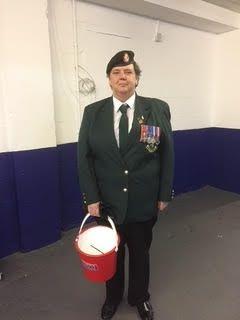
1. Contributed
Sharon Broderick MBE Photo: Submitted
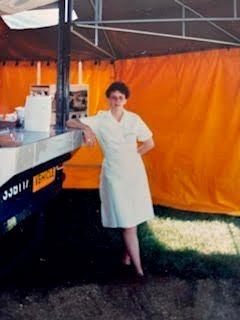
2. Contributed
Sharon Broderick MBE Photo: Submitted
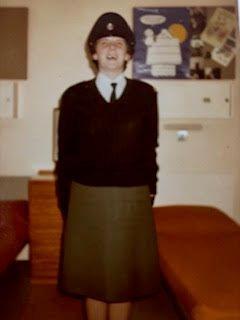
3. Contributed
Sharon Broderick MBE Photo: Submitted
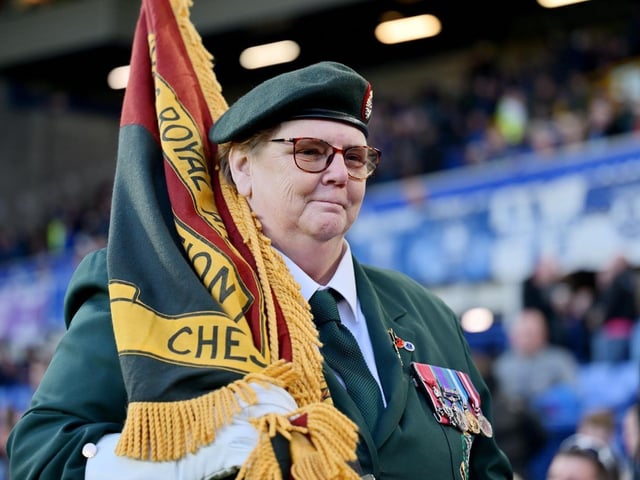
4. Contributed
Sharon Broderick MBE Photo: Submitted