
Flu hospitalisations rise in the North West: cases in your area & what's the advice

As Flu hospitalisation surges nationally, take a look below at what the situation in the Noth West is and what advice is being handed out.
Nationally, flu hospitalisations have surged by more than half in just one week, plunging the NHS into a “worst case scenario” situation for December, new figures revealed yesterday.
An average of 2,660 patients per day were in a hospital bed with flu last week – the highest ever for this time of year and up 55% up on last week.
It means there are enough flu patients each day to fill more than three whole hospital trusts.
NHS chiefs have warned the total has already increased sharply since the week covered by the data, with no peak in sight.
The number of norovirus patients in hospital beds has also risen by 35% – to an average of 354 each day last week – as winter viruses start to engulf hospitals.
It comes as demand for A&Es and ambulance services is already soaring.
New monthly figures show A&E attendances were a record for November at 2.35 million and more than 30,000 higher than November 2024, while there were 48,814 more ambulance incidents compared to last year (802,525 v 753,711).
The record-breaking demand comes with thousands of resident doctors set to go on strike from 17-22 December – sparking fears of major disruption for patients ahead of Christmas.


What’s the situation in the North West?
The latest flu hospitalisation data, published yesterday, shows that in the North West there has been a 36.6% increase in the number of people in hospital with flu:
- Data up to 30/11 - 295 people on average in hospital with flu
- Data up to 7/12 - 403 people on average in hospital with flu
The most recent data in Lancashire
| Hospital | General & Acute flu beds (24/11/25) | Critical Care flu beds (24/11/25) | General & Acute flu beds (7/12/25) | Critical Care flu beds (7/12/25) |
| Blackpool Teaching Hospitals NHS Foundation Trust | 23 | 1 | 31 | 0 |
| East Lancashire Hospitals NHS Trust | 11 | 1 | 19 | 0 |
| Lancashire Teaching Hospitals NHS Foundation Trust | 3 | 0 | 30 | 0 |
| University Hospitals of Morecambe Bay NHS Foundation Trust | 1 | 1 | 20 | 2 |
The most recent data in Merseyside
| Hospital | General & Acute flu beds (24/11/25) | Critical Care flu beds (24/11/25) | General & Acute flu beds (7/12/25) | Critical Care flu beds (7/12/25) |
| Alder Hey Children's NHS Foundation Trust | 10 | 0 | 6 | 1 |
| Liverpool University Hospitals NHS Foundation Trust | 21 | 0 | 34 | 1 |
| Mersey and West Lancashire Teaching Hospitals NHS Trust | 9 | 0 | 22 | 1 |
| Wirral University Teaching Hospital NHS Foundation Trust | 13 | 0 | 6 | 0 |
| Liverpool Heart and Chest Hospital NHS Foundation Trust | 0 | 0 | 0 | 0 |
| Liverpool Women's NHS Foundation Trust | 0 | 0 | 0 | 0 |
| The Walton Centre NHS Foundation Trust | 0 | 0 | 0 | 0 |
| The Clatterbridge Cancer Centre NHS Foundation Trust | 0 | 0 | 0 | 0 |
The most recent data in Greater Manchester
| Hospital | General & Acute flu beds (24/11/25) | Critical Care flu beds (24/11/25) | General & Acute flu beds (7/12/25) | Critical Care flu beds (7/12/25) |
| Bolton NHS Foundation Trust | 0 | 0 | 35 | 0 |
| Manchester University NHS Foundation Trust | 62 | 4 | 101 | 6 |
| Northern Care Alliance NHS Ft | 0 | 0 | 0 | 0 |
| Stockport NHS Foundation Trust | 8 | 0 | 18 | 1 |
| Tameside and Glossop Integrated Care NHS Foundation Trust | 0 | 0 | 0 | 0 |
| Wrightington, Wigan and Leigh NHS Foundation Trust | 2 | 0 | 2 | 0 |
| The Christie NHS Foundation Trust | 0 | 0 | 0 | 0 |
The most recent data in Cheshire
| Hospital | General & Acute flu beds (24/11/25) | Critical Care flu beds (24/11/25) | General & Acute flu beds (7/12/25) | Critical Care flu beds (7/12/25) |
| Countess of Chester Hospital NHS Foundation Trust | 12 | 1 | 25 | 0 |
| East Cheshire NHS Trust | 3 | 0 | 14 | 0 |
| Mid Cheshire Hospitals NHS Foundation Trust | 0 | 0 | 0 | 0 |
| Warrington and Halton Teaching Hospitals NHS Foundation Trust | 8 | 0 | 15 | 4 |
What has been said about the North West’s flu problem?
Dr Michael Gregory, Medical Director at NHS England in the North West said: “The NHS across the North West is facing unprecedented demand for services as winter pressures, increases in the early wave of super flu cases and upcoming industrial action are all adding to usual winter pressures. With the rising number of patients in hospital with flu being extremely high for this time of year, we are asking eligible people to come forward for flu vaccinations as soon as they can to ensure they get this important protection and to avoid becoming seriously ill.
“The flu vaccine is our best defence against the flu virus, and it also helps to reduce pressure on hospitals and hard-working NHS staff who will be working flat out over the festive season.
“If you are unsure where to go for health advice and support, NHS 111 can help find the best place for your condition and it is available 24/7 online at 111.nhs.uk, on the NHS App and by calling 111.”
Who is eligible for the flu vaccine?
You can get the free NHS flu vaccine if you:
- are aged 65 or over (including those who will be 65 by 31 March 2026)
- have certain long-term health conditions
- are pregnant
- live in a care home
- are the main carer for an older or disabled person, or receive a carer's allowance
- live with someone who has a weakened immune system
Frontline health and social care workers can also get a flu vaccine through their employer.
Should we be wearing face masks?
There is no official guidance currently, with various bodies suggesting different opinions.
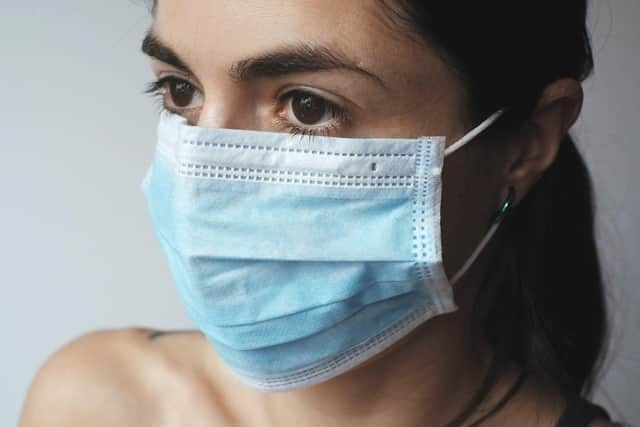
Speaking to Times Radio, Daniel Elkeles, the chief executive of NHS Providers, which represents NHS trusts, said people with flu or cold symptoms “must” wear a mask in public.
He explained: “When you were talking about anything like Covid, I think we need to get back into the habit that if you are coughing and sneezing, but you’re not unwell enough not to go to work, then you must wear a mask when you’re in public spaces, including on public transport, to stop the chances of you giving your virus to somebody else.
“And we were all very good about infection control during Covid. And we really, really need to get back to that now.”
Less forceful in their advice, a No 10 spokesperson said: “There is longstanding guidance in place for people on a range of measures they can consider taking to help limit the spread of winter bugs if they have flu-like symptoms.
“This is neither new nor an instruction but simply something people can consider when trying to limit the spread of winter respiratory illnesses.”
This more relaxed guidance was echoed by Dr Jamie Lopez Bernal, a consultant epidemiologist at the UK Health Security Agency, who said: “If you have flu-like symptoms such as a high temperature, cough or are feeling tired and achy – try to limit contact with others, especially those at higher risk.
“Wash your hands regularly, keep indoor spaces well-ventilated, and if you need to go out while unwell, consider wearing a face mask.”