
'Very exciting' - Fascinating archaeological materials discovered under historic Liverpool dock

Material dating back more than 200 years, linked to Liverpool's maritime history and slave trade, has been unearthed during building works.
Pottery dating back more than 200 years, from the time of George III and the Industrial Revolution, has been discovered during construction work at a Liverpool dock.
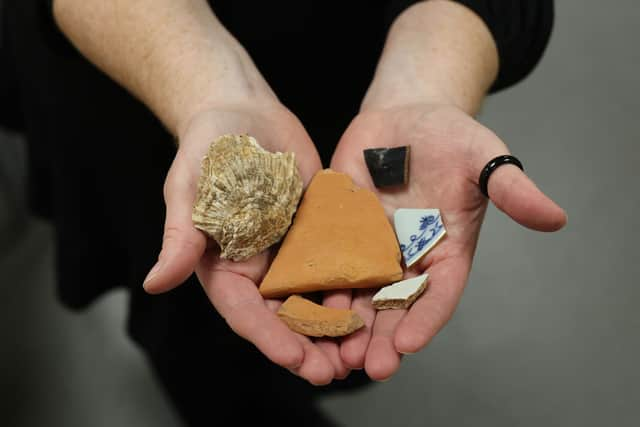
Archaeologists from the National Museums Liverpool have collected fragments of pottery discovered by workers digging small test pits around Canning Dock, which is part of an ongoing £15m renovation project.
The items found include pieces of porcelain, potentially brought to Liverpool from Staffordshire for export, and locally-made tiles and pottery.


The most common of the locally-made finds in Canning Quaysides is fragments of sugar moulds which were used in the processing of the raw sugar into sugar loaves which were ready for sale. The sugar produced by enslaved people, processed in Liverpool, was imported from plantations in the Americas and the Caribbean.
- Get the biggest stories from Merseyside in your inbox with Liverpool World’s free newsletter emails.
This type of find can be linked to known sites and people in Liverpool’s history – such as Jonas Bold, after whom Bold Street is named – a merchant, slave trader and sugar baker nearby on The Strand. Bold also invested in a factory making the sugar moulds.
Liverpool’s waterfront is largely reclaimed land with The Strand marking the original shoreline of the River Mersey. After the overwhelming success of the first dock, now known as the Old Dock, which opened in 1715, demand grew to expand the city’s maritime economy.
From the 1750s onwards the large infrastructure of docks, for which Liverpool became well known globally, was built out into the river. Centuries later, this process of land reclamation makes for fascinating archaeological discoveries.
Liz Stewart, Head of Museum of Liverpool, said: “Construction work around the historic waterfront always piques the interest of archaeologists because we know there’s a chance it will uncover interesting material.
“The redevelopment of Canning Quaysides and Dry Docks is not only about protecting the heritage of the site but also better understanding the layers of its history, so it is very exciting to see what has been hidden in the ground for all these years and consider what stories they tell us.”