
Rebekah Campbell: The one part of Merseyside where more women are killed than anywhere else in the UK
When 32-year-old Rebekah Campbell was attacked in her Knowsley Heights flat earlier this year, it was the latest incident in a series of horrifying murders in Knowsley, all committed by men against women and girls.
On the night of April 15, Rebekah’s partner, Michael Ormandy, broke into her home and knifed her 27 times. Neighbours heard screams and Merseyside Police were called, but by the time emergency services arrived, Rebekah was dying. Ormandy later claimed self-defence, but jurors saw through his cowardly lies and found him guilty of murder. He was subsequently sentenced to life imprisonment with a minimum term of 24 years.
Ormandy’s violence was brutal and deliberate, the culmination of months of control, jealousy, and threats. Rather than take responsibility for his heinous actions, he blamed Rebekah and repeatedly justified and rationalised his increasingly dangerous behaviour.
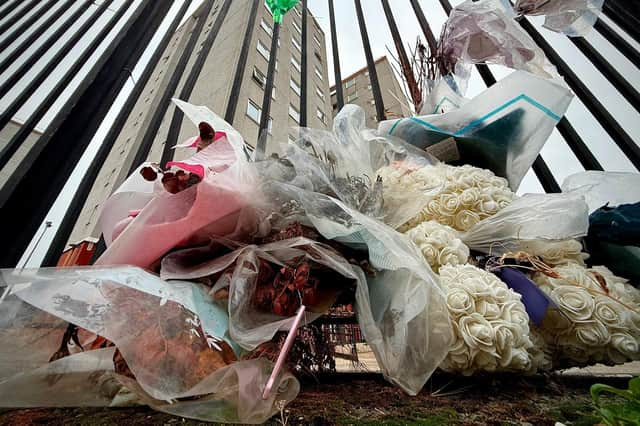

His was a campaign of terror, targeted at a young woman he claims to have loved. Ormandy’s ‘love’ left Rebekah covered in blood, crying out in anguish, terrified and mortally wounded. She was said to have pleaded “get out, go away Mick” as he burst into her home unannounced in a bulletproof vest and brutally attacked her, before asking police officers who rushed to the scene “am I gonna die?” as they fought to save her life.
Rebekah’s death has come to symbolise something far bigger than one horrific crime. The latest Femicide Census, a meticulous national record of women killed by men, revealed Knowsley has the highest femicide rate in the United Kingdom. It is a shocking finding, but perhaps not a surprising one.
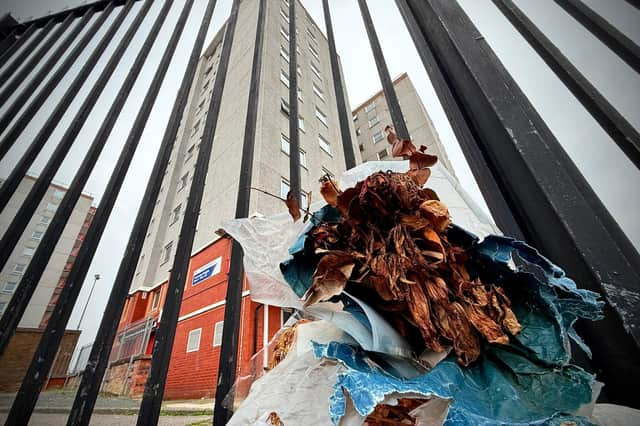
On the day of Ormandy’s sentencing, the LDRS visited the scene were Rebekah’s life was cruelly taken away from her. We had visited these flats on several occasions to investigate complaints made by people about various problems, including damp and anti-social behaviour.
On those visits, the LDRS encountered a number of residents who had been moved to the Heights after suffering past instances of domestic violence. They each spoke about the desperation of their circumstances and a profound sense of isolation and insecurity.
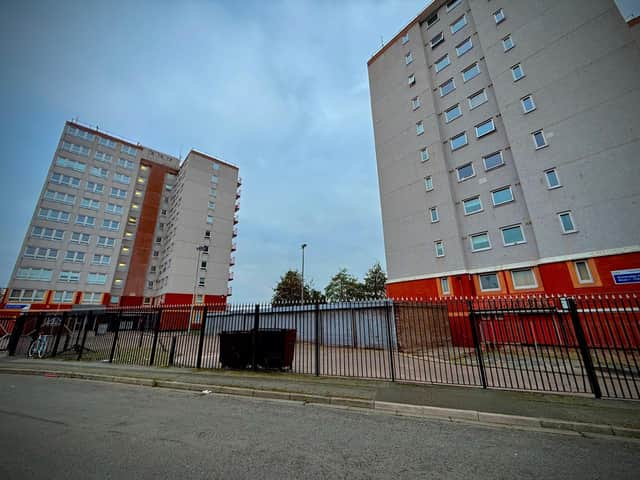
Knowsley Heights is an imposing place, consisting of two separate tower blocks up on a hill, overlooking a busy main road and separated from the neighbouring housing estates. On entering the blocks and walking through the concrete lined hallways, listening to the wind and rain whistling through the open window panes, the bleakness of the space is all too apparent.
Since its unveiling in 1962, the Huyton tower blocks have had a troubled history. In June and less than two months after Rebekah was murdered, Livv Housing confirmed it intended to demolish the buildings and move residents to permanent homes in other locations. The LDRS understands that process is well underway and is scheduled for completion by 2027.
It represents a sombre final chapter to a housing project which promised people the dream of ‘cities in the sky’ and new, modern ways of living. That grand ambition was never fulfilled, and the dream turned into a nightmare as the buildings fell into disrepair.
Whatever it was once meant to be, it will now be remembered as the scene of one of Merseyside’s most callous murders.
It is easy to think Rebekah’s killing was an impulsive and random act of violence, separated from any logic or understanding, but that would be a mistake. In fact, far from standing alone, Michael Ormandy’s crime is just the latest, devastating example of women and girls being killed by men in Knowsley.
Every review into a domestic homicide seems to return to the same failures: missed warnings, fragmented communication, underfunded services. In Knowsley and other deprived areas. These failures are compounded by social and economic pressures, including years of austerity which stripped away the infrastructure that helps women escape, refuges, outreach programmes, housing support, legal aid.
Nationally, around two women a week are killed by men, yet prevention efforts remain chronically underfunded. Significantly, more than half of domestic abuse survivors face homelessness after being turned away from refuges due to a chronic national shortage of spaces. It is little wonder then, that vulnerable women are often placed in undesirable housing conditions.
Even when victims report abuse, responses are inconsistent. A 2025 Domestic Abuse Commissioner’s report raised serious questions about how the criminal justice services deal with instances of domestic abuse. The report found that victims routinely face a lack of specialist service referrals, poor enforcement of protective orders, court delays and early release of abusers as they seek safety and justice.
Caroline Grant is the chief executive of The First Step (TFS), which is Knowsley’s only independent specialist Domestic Abuse Service. To understand the scale of the issues it was dealing with, TFS commissioned The Femicide Census to complete an independent review into the killing of 63 local women in Merseyside since 2009.
In March 2023, The Femicide Census identified Merseyside as having the highest total number of femicides in the country, whilst the data showed Knowsley had the highest rate of killed women in the United Kingdom, for the previous 12-month period.
Ms Grant said: “We launched the research in December 2024, at Knowsley’s first-ever Violence Against Women and Girls Conference. The review laid bare the stark reality of femicide in Merseyside.
“There was an identifiable risk of serious harm against women by the men who killed them evident in all the cases of femicide in Merseyside where they were known to the authorities.”
“We hear the term ‘lessons learned’ time and time again but when the same lessons are being learned in the same place, we must ask: is anyone really learning? Or has responding to the murder of women become just a tick-box exercise for the state? We refuse to accept that as our reality.
“That’s why we commissioned the report and named it : “Femicide in Merseyside – 15 Years of Failing Women.”
Since publication, TFS said Merseyside PCC Emily Spurrell has responded positively by organising the first Femicide Oversight Group to review its review recommendations, alongside senior leadership teams across Merseyside Police, Probation services and the region’s local authorities.
Detective Chief Superintendent Paul Lamb, head of investigations in protecting vulnerable people, said the force welcomes the ‘Femicide in Merseyside’ report for shining a spotlight on this issue and have reflected on the recommendations the report makes for the wider partnership.
Det Ch Supt. Lamb added: “The death of Rebekah Campbell and the unfathomable devastation her murder caused are a stark reminder of the importance of tackling the issue of violence against women and girls head on.
“Since launching our Violence Against Women and Girls strategy in 2022, Merseyside Police has taken significant steps to enhance the safety and wellbeing of women and girls across our communities.”
Knowsley’s high femicide rate is not an aberration; it’s a warning light for the rest of the country.
The borough’s struggles reflect what happens when inequality, austerity and gender-based violence collide, creating a situation where deprivation intensifies dependence, housing insecurity traps victims and mental health support, already overstretched, falters.
In the aftermath of Michael Ormandy’s sentencing at Liverpool Crown Court this week (October 16), Rebekah Campbell’s family described their profound anguish and said they are “heartbroken”. Their grief is immeasurable.
What makes femicide so unbearable is the knowledge that so many of these cases were entirely preventable. The depressing facts suggest the system is built to respond after women are dead, not before.
Every year, the Femicide Census publishes another report, another list of names. Each one tells the same story: the ignored warnings, the inadequate safeguards, the societal impotence. Knowsley’s place at the top of the femicide league table is a point of shame and should serve as a renewed catalyst for change.
It is a vision shared by Knowsley MP Anneliese Midgley who said urgent action is required: “My heart goes out to Rebekah Campbell’s family and friends. The family has shown real courage and bravery in the face of the complete lack of remorse from Rebekah’s killer.”
She added: “Violence against women and girls is a poison which must be purged from our communities. Urgent action is needed to address the underlying issues and systematic failures which too often lead to the deaths of vulnerable women.
“The recommendations of the Femicide Census’ 2000 Women report need to be seriously considered; we need meaningful action and leadership on this issue now, and I will work continue to work with local and national partners to make this happen.
“Rebekah will never be forgotten, and her voice will continue to be heard as we fight to make the world a safer place for women and girls.”
Caroline Grant of TFS said Rebekah’s memory will strengthen its resolve to ensure no one suffers in silence or faces violence in their own home, adding: “Rebekah will be remembered at our vigil on 25th November outside Liverpool Crown Court.
“We will be marking 16 Days of Action to End Violence Against Women and Girls, where we will read the names of every woman and girl in Merseyside who has lost her life at the hands of a man.”