
'Generational harm' - 1,000s of new burial plots approved despite concerns for much-loved community asset
Thousands of new burial plots have been approved in one part of Merseyside, despite ‘1500’ objections from people concerned about the ‘generational harm’ to a much-loved community asset.
The proposal relates to an area of land at Whiston Woods and the change of use to a cemetery, incorporating burial and memorial plots, footpaths, parking areas and other associated works. However, some people have complained the development would result in a significant depletion of the green belt.
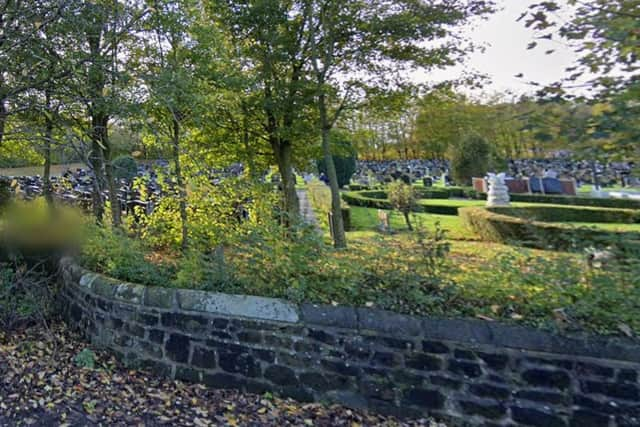

Knowsley Council previously expressed concerns the borough was running out of burial spaces and first announced plans to buy part of Whiston Woods in 2023. On February 20 this year, it submitted a planning application to St Helens Council which was approved at a planning Committee meeting (November 4).
The agreement means Knowsley Council will pay the borough almost £500,000 in Section 106 payments to mitigate the loss of open spaces arising from the later phases of the development.
The expansion to the site will see the provision of 5,447 cemetery plots and will be carried out over a phased programme of delivery, extending over an estimated 100-year-period.
St Helens Council said Phase 1 will provide approximately 1,313 burial plots and 998 cremation plots, and would meet demand for the next 30 years. Two further phases would be brought forward beyond 30 years and 55 years respectively, subject to burial and cremation trends.
Under Phase 1, the area will remain open to the public and works will see a network of surfaced pedestrian paths, self-binding gravel routes, bark chip trails, and a composite timber boardwalk, integrated with existing informal paths. The majority of existing woodland will be retained and enhanced by new tree planting, wildflower meadow areas, and the creation of wetland habitats.
Representing Knowsley Council at the planning committee was its head of environmental sustainability and communities, Caroline Holmes who spoke in support of the application, she said: “We wish to create and deliver a special place, both for Knowsley and St Helens residents alike, to lay their loved ones to rest, but also to enhance the wider site for to enjoy.
“The design has been developed to allow those who wish to visit the site to visit the woodland, to do so without necessarily having to interact with the cemetery area, and to enable its current use.”
Ms Holmes added: “We’ll also be looking to put boardwalks in, particularly to enable public access to the site will be retained with could you work with the public access to the site will be retained with four new and upgraded entrances provided formalised access controls to help prevent any anti social behaviour, and the proposed car parking will be available for all site users, not just for the cemetery users.”
Objections to the application were presented in a joint statement by Jackie Fox and Sue Parry from the ‘Save Whiston Woods’ campaign group, they said: “Over 1500 individual objections have been submitted, and we’re speaking today for all of those voices, the families, the hospital staff, the walkers, the young people and older residents who love and depend on Whiston Woods.
“This is not just about emotion, it’s about policy, law and the irreversible harm this development would cause to the protected green belt land.
“Paragraph 153 of the NPPF (National Planning Policy Framework) is clear, substantial weight should be given to any harm to the Greenbelt, including harm to its openness. The officers report concludes that openness will not be harmed, relying on paragraph 154H, which mentions cemeteries as a possible exception, but that exception only applies if the openness is preserved, and in this case, it would not be.
“Two major appeal decisions from the golf courses have already ruled that cemeteries cause permanent and irreversible harm to the openness of the Greenbelt. Inspectors stated that cemeteries introduce formal structure and development contrary to the principle of openness.
“They include fencing, access roads, lighting, car parks and monuments. They are not temporary intrusions. They are permanent urban features. Once the openness of Whiston Woods is lost, it will never return. That harm would last for generations.”
Responding to the claims about the use of green belt land, a St Helens planning officer said: “Cemeteries, as defined in the NPPF, can be appropriately developed on the green belt where openness is preserved and it doesn’t conflict with the five purposes of the green belt.
This is a judgement that officers made, and the officer’s judgement is that the green belt openness is preserved.”