
I walked miles on end just to realise the sea was not clean and full of jellyfish!
Mud is causing chaos for people visiting a Merseyside beach amid renewed calls for an updated strategy to transform it.
Cllr John Pugh has spoken out after some negative news coverage about Southport beach and repeated concerns about the ‘increasing muddy expanse’ developing on Sefton’s coastline. Cllr Pugh has called on Sefton Council to employ ‘some lateral thinking’ to ensure people have access to the ‘golden sands’ at the end of the pier.
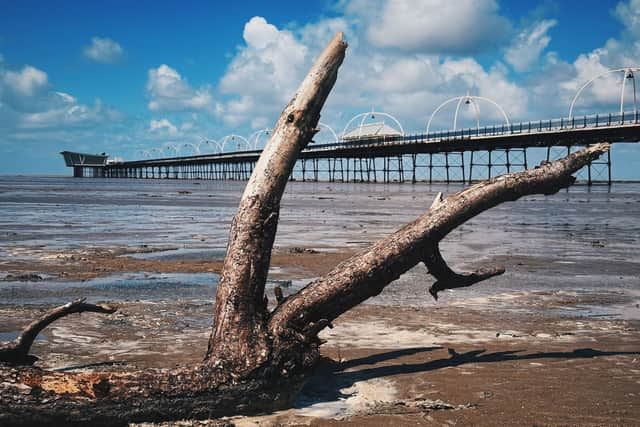

Cllr Pugh said: “We can do without the brickbats, but the way to deal with them is actually to do something! Sefton Council’s strategy here is to just let nature take its course, do nothing about vegetation and let muddy areas increase.
“We can’t stop tidal processes altogether, but happily the tides have brought us beautiful expanses of golden sands west of the pier that you currently cannot get to over the mud. The Leisure Beach has moved and Sefton hasn’t noticed.”
The LDRS first reported Cllr Pugh’s concerns in April when the elected member for Dukes ward said Southport’s beach has turned into a ‘grass infested muddy expanse’. At the time, Cllr Pugh called on Sefton Council to intervene, he said: “I could accuse the current council leadership of sticking their heads in the sand, but unfortunately there is not enough left.”
Sefton Council have attributed the reduction in sand on Southport beach to ‘accretion’ which is the process of coastal sediment returning to the visible portion of a beach. A sustainable beach often goes through a cycle of submersion during rough weather and later accretion during calmer periods.
A spokesperson for Sefton Council said: “Accretion isn’t anything new. In fact, it’s been well-known since the Victorian era of Southport. Healthy, dynamic coastlines change. They will continue to do so and have done so for thousands of years. It is important that we work with these powerful, natural processes.
“The areas of vegetation referred to have beauty in their own right, and play a vital role and benefit to the environment – as important coastal and flood defences, and as a carbon sink contributing to climate change mitigation as well as being the home to rare and other salt-marsh species.”
Recent visitors to the beach have been far from satisfied, based on feedback posted on TripAdvisor. One frustrated holidaymaker named Jessica raged: “Horrible, walked miles without seeing any sea, shells everywhere, it’s just sand and there are no cubicles to get changed.”
Another visitor, Suzie, agreed, posting: “Absolutely disgusting! One of my worst experiences ever. Walked miles on end for the sea just to realise that it was not clean and full of jellyfish. There were shells everywhere and my feet got cut with shells and sharp objects in the sand. Do not go to this beach for the sea because you will never find it!”
Which? magazine has named the beach as one of the worst seaside towns in the UK for two years running. However, Cllr Pugh is suggesting that a re-design of the end of the pier – with access down to the new and expansive Leisure beach, possibly paralleled with wooden walkways – could make Southport beach popular again.
Cllr Pugh said: “We should do something with the old leisure beach to curb further deterioration, but opening up the vast expanses of sand and sea west of the Pier is the key to the future. It’s fantastic area to take a dog, play volleyball or whatever… if you can get to it!”
Cllr Pugh further addressed the safety concerns around accessing certain parts of Southport beach, adding: “Southport beach presents no more risk than countless other beaches across the country and considerably less than many. It currently has coastguard and lifeboat cover.
“The real threat ironically is increasing mud deposits making a lifeboat harder to launch which is what happened in Hoylake.”