
'No natural defence' - Incurable disease spreading across UK will cost £15bn to manage
An ’emerging challenge’ is spreading across the UK which will likely cost more than £15bn, according to a Knowsley Council report.
The enormous cost associated with Ash Dieback disease was laid bare during a ‘Tree Management Policy’ (TMP) presentation at Huyton’s Municipal Building last week (September 25). The TMP sets out the council’s approach to managing trees in its ownership, under its management, and trees in private ownership that pose a safety risk to the public.

It also provides information on Tree Preservation Orders (TPOs), trees in Conservation Areas, and trees in relation to new developments. Section 8 of the TMP deals specifically with risk management and the processes in place to deal with trees which pose a potential safety risk.
The key update to the local authority’s new policy is the adoption of the VALID approach to tree risk management. VALID is an internationally recognised method for assessing and managing risks associated with trees. The Council will manage trees based on the level of risk; essentially high-risk trees will be surveyed more frequently than low risk trees.
Presenting the report was Knowsley Council’s capital programmes manager, Chris Birtles, he said: “One particular challenge, which is an emerging challenge, but a significant one, we’ve addressed in the policy is our approach to Ash Dieback disease.
“Ash Dieback is a fungus which originated in Asia, but since its introduction to Europe about 30 years ago, it has devastated European ash trees, because our native ash trees have no natural defence against this disease.
“It was detected in UK for first time in 2012 and it’s now very widespread and we do have it here in Knowsley. We see evidence of the disease throughout the UK, and Ash Dieback is predicted to cost the UK £15bn to deal with.”
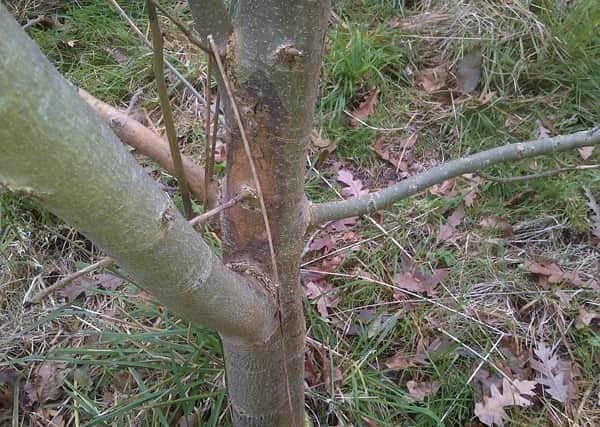
According to guidance published on Knowsley Council’s website, when an Ash tree is infected by Ash Dieback, it causes the crown to dieback from the outer crown inwards. As the crown continues to dieback, the dead branches become brittle over time and break off which then starts to present a danger to the tree’s surroundings.
The £15bn figure cited by Mr Birtles in the council report originates from a 2019 reserch project conducted by the University of Oxford. The report said the predicted costs arise from clearing up dead and dying trees and in lost benefits provided by trees, e.g. water and air purification and carbon sequestration.
It added that the loss of these services is expected to be the biggest cost to society, while millions of ash trees also line Britain’s roads and urban areas, and clearing up dangerous trees will cost billions of pounds.
At the time, the co-author of the research and senior adviser at the Woodland Trust, Dr Nick Atkinson said that the majority of the cost will be shouldered by local authorities: “As we know, local authorities are not well funded and they are certainly not funded enough to deal with an epidemic of this magnitude. There is this hole in the policy of responding to events like this.”
Continuing the council presentation, Mr Birtles added: “The disease affects trees of all ages, and young trees can be killed in one season. All the tree centres come after several seasons of infection, and there’s no treatments currently for Ash Dieback so diseased trees need to be removed.
“We do not know the full extent of the disease, but where we have identified dangerous trees, these have already been dealt with in many instances. One way to prevent incidents like this taking place in the future is to improve the resilience of woods to climate change, and we do this by increasing the genetic diversity of the trees within our woodlands.”