
I'm 1 of the UK's last violin makers and we need young people to stop the centuries-old craft dying out

One of Britain’s last remaining violin makers fears the centuries-old craft might die out if young people don't enter the industry.
Rudolf Pilsel, 72, works from his workshop in Crewe, Cheshire, hand-crafting violins, violas, cellos and bows using techniques unchanged for centuries. He says the trade is being crushed by banned materials, disappearing training routes, and a generation growing up without touching real woodwork tools.
There are now only around 20 makers like him left in the UK and Rudolf fears the skill may die out completely. During his 53-year career, Rudolf has made hundreds of violins, violas, cellos, and bows for musicians across the world.
Rudolf’s handcrafted violins sell from £6,500, while his cellos start at £12,500 and his bows £2,000. Sadly he says the materials at the heart of his work are becoming almost impossible to source.
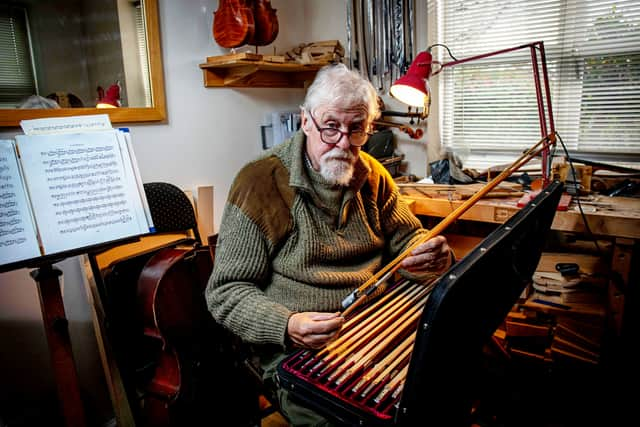

He said: “The wood used to create these intricate bows, Pernambuco wood from Brazil, now has to be registered by the government, and you have to update your stock list so you’re not adding more.
"It became endangered, and so you are not allowed to update your stock either. If you try to buy from Germany, or France, where production is larger than the UK, you will have trouble bringing them back, because of the ivory, whale bone, and tortoiseshell used in the bows.”
Rudolf says the modern materials used in instruments nowadays are not to every musician’s taste. He added: “People now use carbon fibre, but each bow’s hair is so particular to the player, and to the instrument.
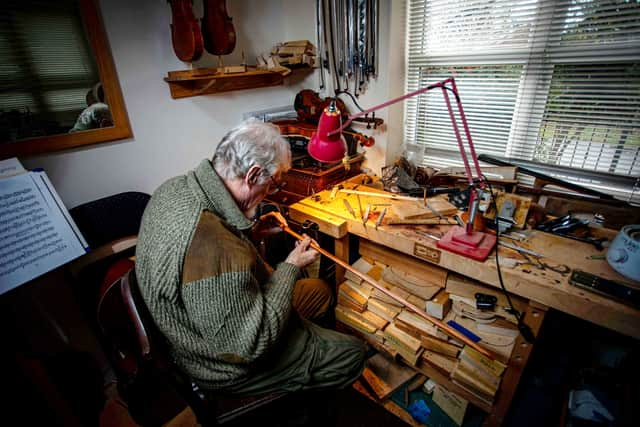
“Some may get on with carbon, but other players don’t. I think there are people that would like to make the bows, but I began to do wood work at school when I was 14 because it captivated me and it was what I wanted to do. If I didn't know how to do wood work then, I wouldn't be making violins and cellos by 21, it is a long term thing.”
He believes the decline of hands-on skills is a major reason few young people enter the industry. He said: “Schools don’t teach wood work like they used to, it’s rarer. They’ll teach you how to pay a mortgage, but they won’t chuck a bit of tree at you and tell you to carve it by hand anymore.”
Despite his age, Rudolf still spends up to eight hours a day in his workshop, carving, shaping and tuning each instrument by hand. A single violin with a matching bow can take up to two months to complete, yet he sometimes finds the materials needed close to home.
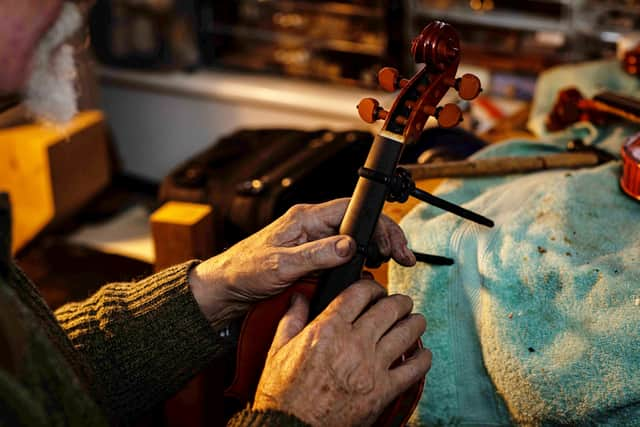
He said: “A lady around the corner was cutting down a whole tree and gave it to us. It was 12 tonnes of wood and took us weeks and weeks to cut down.”
Rudolf, who has no plans to retire, adding: “You never know truly how the bow will sound on the strings, that’s why I like to go to watch the instruments I have made play, they all have a different buzz that brings them alive.
“I am happy with what I am doing and I will carry on for as long as I can. It is a great trade, I have always lovely. In the future, there will be only a couple of people who can do what I do, it is going to be harder for the next generation to find us.
“Violin dealers will be going great though - they’ll be the only ones with instruments like mine left for resale.”