
'England's exhaust': CEO behind 200km Merseyside pipe project responds to backlash

The CEO behind a major Merseyside project has responded to a backlash over plans for a 200km pipe. One politician said the area risked becoming England’s “exhaust pipe”.
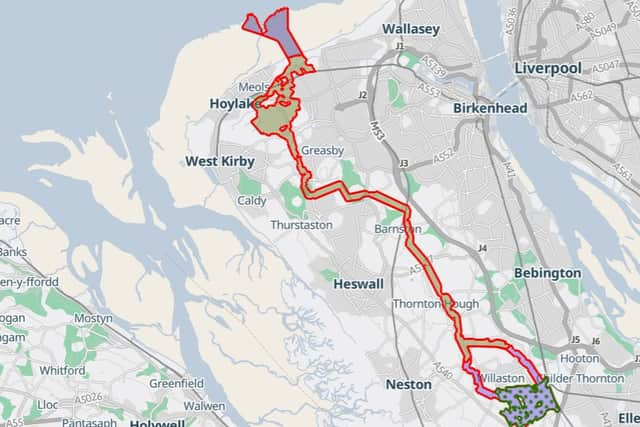
People are angry and raising fears over plans to run the end of a 200km carbon dioxide pipe through the Wirral. The Peak Cluster project is looking to take carbon dioxide emissions from four cement and lime producers around the Peak District and store them in the depleted Morecambe gas fields under the Irish Sea.
The project, which is in its early stages, is being put forward to help the industry cut down on emissions and tackle climate change. An onshore facility is also being considered in Meols to compress the gas before it is stored.
There have been many posts on Facebook pages and a recent public engagement event reportedly “had to shut the doors for safety at one point with people queuing across the car park”. Following the event, Wirral’s Conservatives said Wirral was under threat “on so many levels” and people “were rightfully very angry today”.
In a post, Conservative councillors Andrew Gardner and Max Booth, who represent Meols where a new facility is proposed, said: “Nothing presented convinces us that this is the right move for Meols and the Wirral.”
Get the biggest stories from Merseyside in your inbox with Liverpool World’s free newsletter emails.
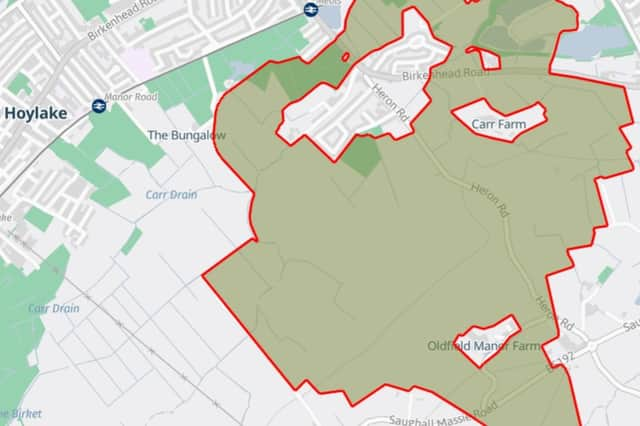

At an environment committee meeting on January 27, Labour councillor Mark Skillicorn said the Wirral should not be treated as “England’s carbon dioxide exhaust pipe”, adding: “I, and many more, stand firmly opposed to the Wirral being used as a dumping corridor for other people’s emissions.”
David Burgess-Joyce, chair of Wirral Reform, said they had been raising concerns about carbon capture since last year and the pipeline would be “carrying toxic waste to the beach at Moreton”. He called for councillors to “oppose this environmental vandalism”.
Labour chair Cllr Liz Grey in response said she shared concerns about the project along with many councillors, criticised a lack of information, and urged people to make their views known to Peak Cluster.
Speaking to the LDRS, Peak Cluster CEO John Egan said another event is being organised and welcomed further questions. He stressed this was phase one out of three with people to be asked again for their thoughts towards the end of 2026.
Responding to concerns, Peak Cluster said: “Once construction ends, we will reinstate the majority of the land so it can be used in the same way as it was before and, just as with other pipelines under our feet, the land will look and feel just as it did before.”
The CEO said the Wirral was seen as the most feasible route to the Irish Sea. Possible routes from the Lake District to north Wales were explored including connecting up with a similar Hynet scheme under Liverpool Bay but had been ruled out.
Responding to safety concerns, Mr Egan said it would be similar to the existing natural gas network but provide carbon dioxide instead, adding: “All of these kinds of things will be exactly the same. It’s not like we are inventing something new here.”
He said the pipe will run at a lower pressure than the UK’s National Transmission System, a system of nearly 5,000 miles of large gas pipelines. However it will be higher pressure than the wider gas network providing gas to homes and businesses.
He said: “I understand it’s our responsibility to reassure people on that point. We will be regulated by the Health and Safety Executive like all other gas pipelines and under the same regulations.”
Like other pipelines, there will be block valves along the route which would allow Peak Cluster to isolate sections. Regular inspections and early detection systems are also promised and agricultural land would be restored following installation of the 24 to 36 inch diameter pipe.
As for the carbon dioxide storage itself, he said the Morecambe gas fields had high concentrations of carbon dioxide in the natural gas. Risk assessments as well as monitoring plans and a plan on how to resolve any potential issues are also expected to be in place.
He added: “Fundamentally the gas reservoirs have stored high pressure natural gas for millions and millions of years until humans came along and took it out and pumped it to our homes and businesses. Those stores have been proven over millions of years that they can store pressurised gas.”