
Work has begun on repurposing a treasure trove of Merseyside history on Crosby’s ‘Blitz beach’
Work has begun on repurposing a treasure trove of Merseyside history on Crosby’s ‘Blitz beach’.
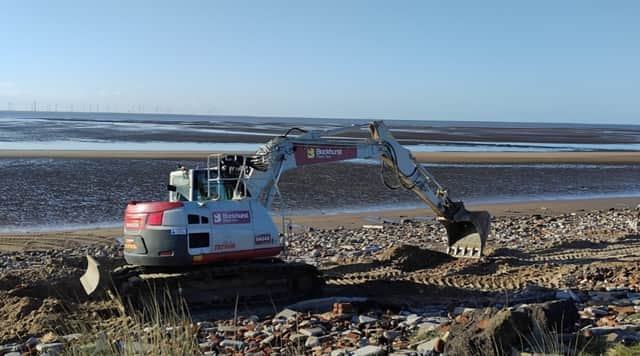
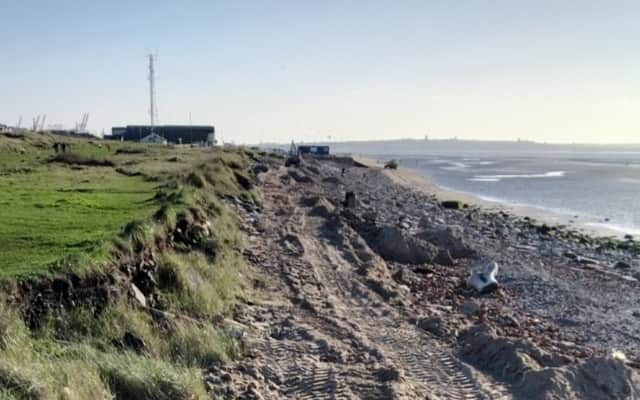
Around 400 tonnes of rubble will be scooped up and redistributed along the coastline, north of Hall Road, in Blundellsands.
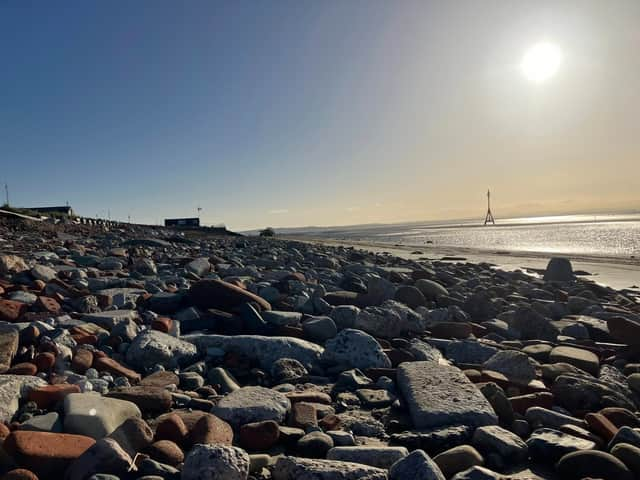
The so called “Blitz Beach” is noted for the fragments of old buildings that lie strewn across the sand. The bricks, stones and ceramics belong to buildings that were bombed during the Blitz, which devastated Liverpool and changed its landscape forever.

For seven nights between May 1 and May 7, 1941, Liverpool was heavily bombed by the German Luftwaffe, killing and injuring thousands of people and destroying homes, shops and landmarks. The remains of some of those buildings have since been found on Crosby beach, from Georgian and Victorian houses to church gravestones.
On a recent visit to the area, the LDRS found an array of wartime artefacts which cover the sand, from piles of discarded masonry to the pillars of old buildings and ceramic tiles.
Liverpool was the most heavily bombed city outside of London during the Blitz, and like many places it was left with the problem of what to do with the rubble. Much of it is thought to have been transported to the beach for use in sea defences and has since been uncovered.
In a 2022 report by the Liverpool ECHO, Archaeology student Emma Marsh said the beach offers a window into Merseyside’s modern history, adding: “I found a gravestone and I used Ancestry to search the names of the people to work out where they were buried.
“It was Wesleyan Methodist Church which was severely damaged in WW2 and what was left of it burnt down as a result of a fire in the 60’s.
“People are stepping on the rubble without realising what it is. I had to research it to find out what it was. There’s no signage at the moment to tell people.”
This week, local residents have been posting updates on social media as mechanical diggers and excavators pulled up and started the laborious process of removing some of the rubble. As a result, the LDRS contacted Sefton Council to find out what was happening on its famous coastline.
A Sefton Council spokesperson said: “With the help of a third-party contractor, we are removing approximately 400 tons of rubble from the beach and returning it to the ‘Blitz beach’ north of Hall Road.
“This has two benefits. One is to help prolong the life of the concrete sea defences, while the other is moving the rubble to a part of the coastline where it can act as a defence against erosion.
“The work has been carefully planned to limit disruption as much as possible.”