



The new OmicronCovid-19 variant is feared to be more transmissible than other mutations and can cause different symptoms than the original coronavirus strain.
The variant, first detected in South Africa, has been categorised as a ‘variant of concern’ by the World Health Organisation (WHO) and has already been found to have 30 different mutations, including traits not previously seen before.
Stricter face masks and self-isolation rules have been introduced in response, while the UK government has announced the booster vaccination programme will now be extended to all adults, with everyone due to be offered a top-up dose by the end of January.
The decision comes amid concerns that Omicron transmits more easily and could potentially evade vaccines, although it is still too early to tell.
New research from South Africa, which has not yet been peer-reviewed, also suggests the variant has “substantial” ability to cause reinfection among people who have previously ha Covid-19.
Findings so far indicate that for most people the variant only causes “mild illness”, although as little is known about the strain, it is possible this could change.
Dr Angelique Coetzee, a private practitioner and chair of South African Medical Association, who first spotted the new variant said that while patients have so far had “extremely mild symptoms”, more time is needed to fully understand the effect it could have on vulnerable people.
Patients have also reported symptoms that differ slightly to those linked to the Delta variant, according to Dr Coetzee.
Listed are six key symptoms that have been associated with the Omicron variant so far, and the difference to other Covid-19 strains.
Related stories:

9. Skin, lips, nails
People infected with Omicron may notice that their skin, lips or nail beds may develop a pale, grey or blue-coloured tinge, according to health experts at the Centre for Disease Control (CDC). This symptom is thought to be a result of low oxygen levels in the body. | Shutterstock

10. What about taste and smell?
Unlike other Covid-19 variants, the Omicron strain has not yet been linked to a loss of taste or smell. This is typically an early symptom of coronavirus infection and usually lasts around five days. | Shutterstock Photo: Shutterstock
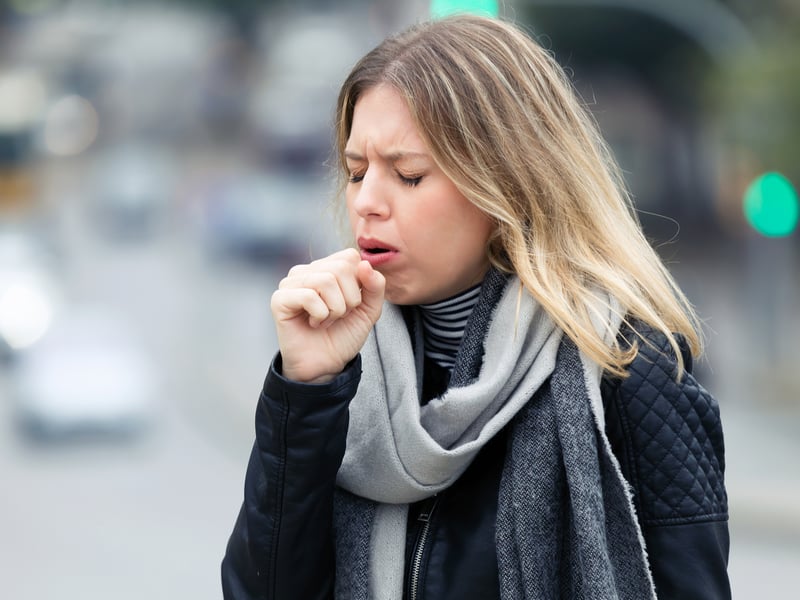
11. Does Omicron cause a cough?
A cough is one of the key symptoms of the original Covid-19 strain, but as yet, it has not been associated with Omicron. The NHS advises anyone who suffers from a new, persistent cough to take a test. | Shutterstock Photo: Shutterstock

12. Will I get a fever?
A high temperature is another of the three main symptoms of Covid-19, but again, this has also not been linked to Omicron. The NHS says a high temperature means you feel hot to touch on your chest or back, and you should take a PCR test if you feel unwell. | Shutterstock Photo: Shutterstock