
Two rare Sumatran tiger cubs have emerged from their den for the first time for some playful ‘rough and tumble’ after being born at Chester Zoo in January. Zookeepers caught the twins on camera as they took their first steps outdoors under the watchful eye of proud mum Kasarna.
Conservationists hope the births can provide fresh hope to one of the world’s rarest tiger species, which are listed as critically endangered in the wild by the International Union for the Conservation of Nature (IUCN).
Sumatran tigers are only found in patches of forest on the Indonesian island of Sumatra where just 350 remain. Experts say habitat loss, poaching, hunting pressures and human-wildlife conflict are pushing the big cats ever closer to extinction.
The cubs are both female and have been named Alif, a popular name in native country Indonesia, and Raya after Mount Raya in Sumatra.
Dayna Thain, carnivore keeper at Chester Zoo, said: “These majestic animals are hanging on to survival by a thread in Sumatra. They’re one of the world’s rarest tiger subspecies and so to see these two cubs thriving here is absolutely wonderful.”
Chester Zoo is part of an international conservation breeding programme aimed at protecting the species, boosting numbers and safeguarding its future on the planet.
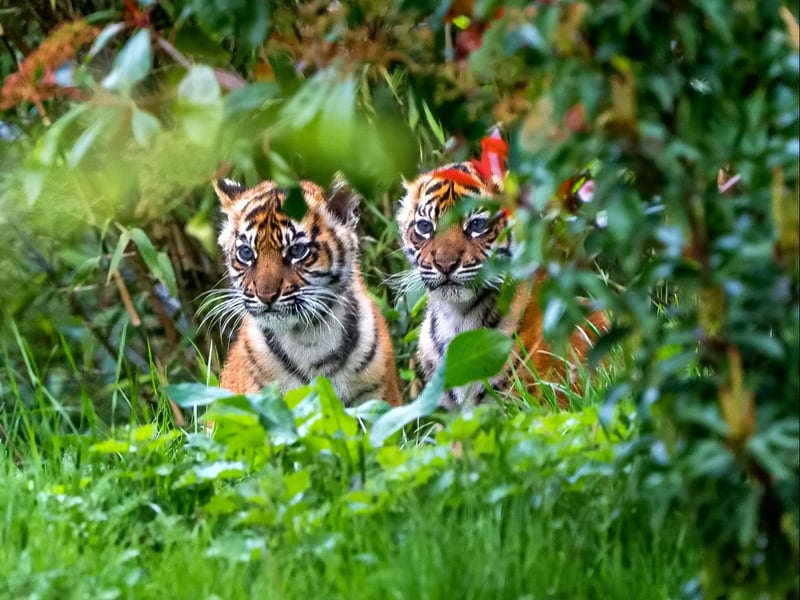
1. Sumatran tiger cubs Alif and Raya
Two rare Sumatran tiger cubs emerging from their den for the first time at Chester Zoo. | Chester Zoo / SWNS Photo: Chester Zoo / SWNS
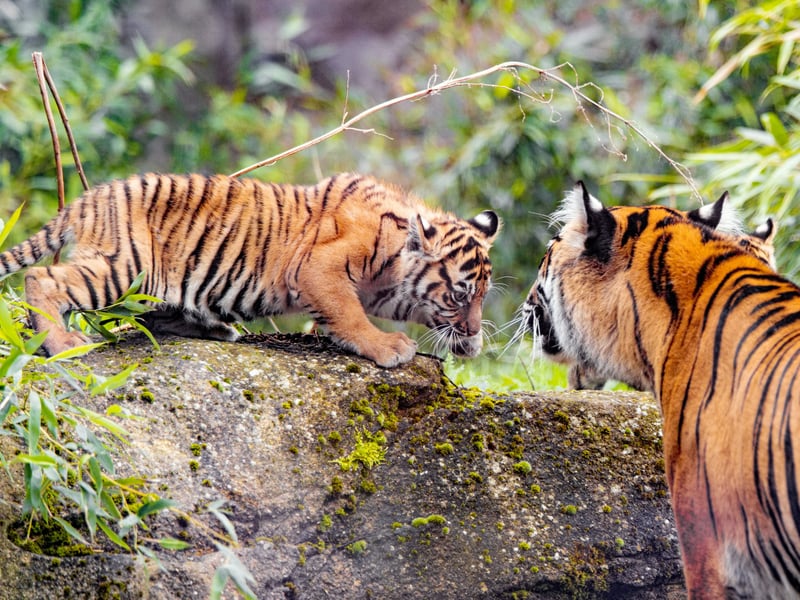
2. Sumatran tiger cubs Alif and Raya
Conservationists caught on camera the adorable moment the cubs enjoyed some playful ‘rough and tumble’ under the watchful eye of proud mum Kasarna. | Chester Zoo / SWNS Photo: Chester Zoo / SWNS
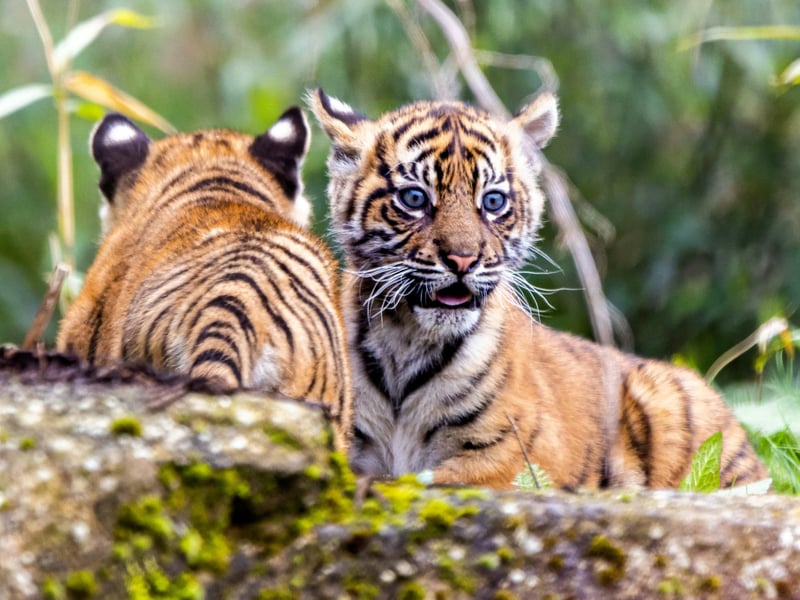
3. Sumatran tiger cubs Alif and Raya
Carnivore experts at the zoo have revealed both cubs to be female and have named the twins Alif, a popular name in Indonesia, and Raya after Mount Raya in Sumatra. | Chester Zoo / SWNS Photo: Chester Zoo / SWNS
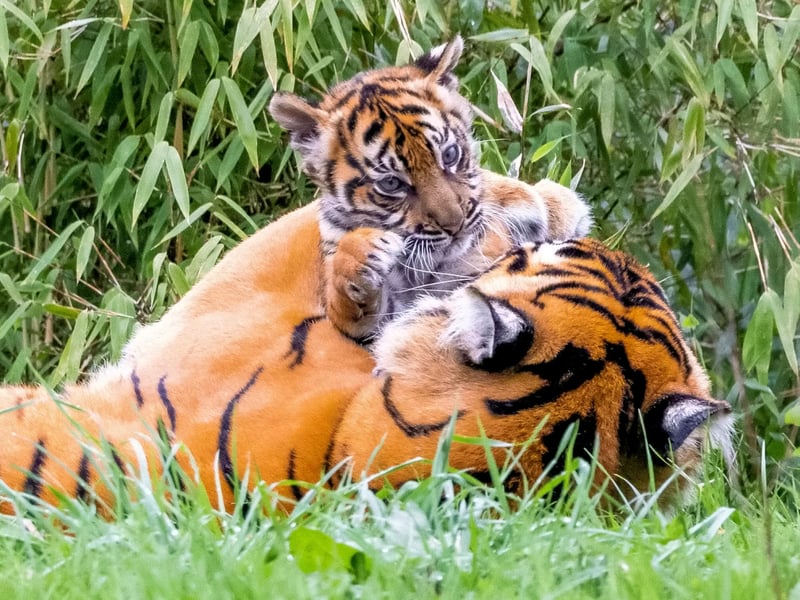
4. Sumatran tiger cubs Alif and Raya
Sumatran tigers are found only in patches of forest on the Indonesian island of Sumatra where just 350 remain. | Chester Zoo / SWNS Photo: Chester Zoo / SWNS