
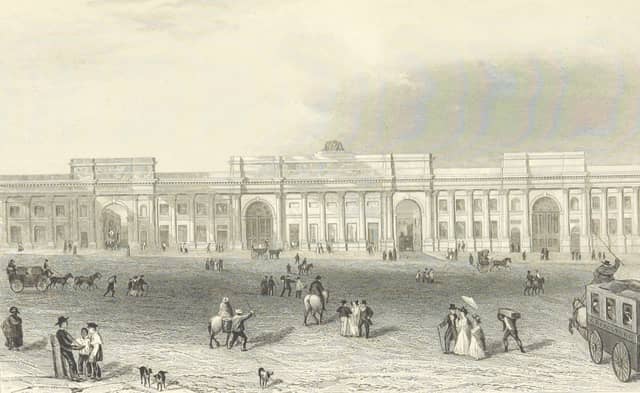

Named after the lime kilns of businessman William Harvey, every person who has been to Liverpool is likely to have set foot on Lime Street - famed for its bustling railway station of the same name.
First laid out in 1790, Lime Street stretches from Wellington's Column at the junction with William Brown Street - home of the World Museum, Liverpool Library and the Walker Art Gallery in the Cultural Quarter - to the Adelphi Hotel and Renshaw Street.
Once home to a fantastic cinema and the iconic Lewis’s department store, the historic street has seen major changes over the last two centuries - though not all of them have been well received. The Lime Street Redevelopment, designed by Broadway Malyan and completed in 2019, was chosen by the Carbuncle Cup jury as the ‘very worst new building in Britain’.
But, the street has seen its fair share of great historical moments too, including a procession for the future King Edward VII, Lord Kitchener's recruitment for WWI, suffragettes rallies, Champions League parades and Eurovision celebrations.
Take a look at the 26 photographs below, showcasing Lime Street’s interesting 235 year history.
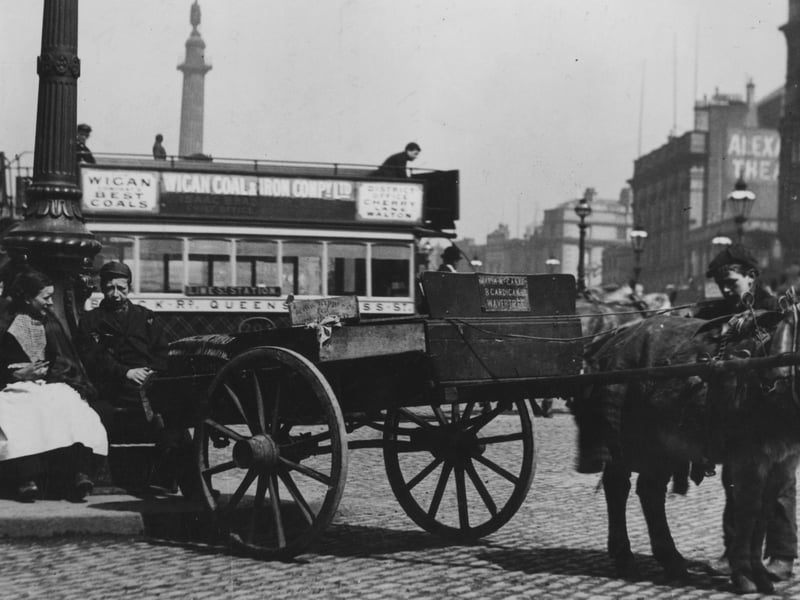
5. Lime Street - 1895
A pony cart is parked in front of a horse-drawn tram on Lime Street. You can just see The Alexander Theatre on the right, which later became the well known variety theatre, The Empire. | J. Burke/Hulton Archive/Getty Images Photo: J. Burke/Hulton Archive/Getty Images
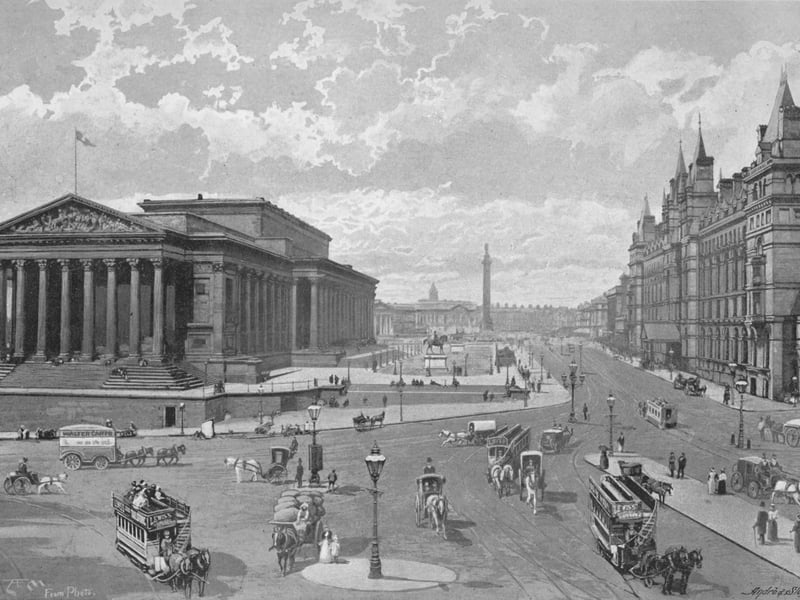
6. Lime Street - 1896
St George's Hall and the North Western Hotel stand on opposite sides of Lime Street. The hall was built to provide a spectacular welcome to Liverpool for train passengers and the resplendent hotel provided somewhere for them to stay as Liverpool became the second city of the British Empire. | Getty Images
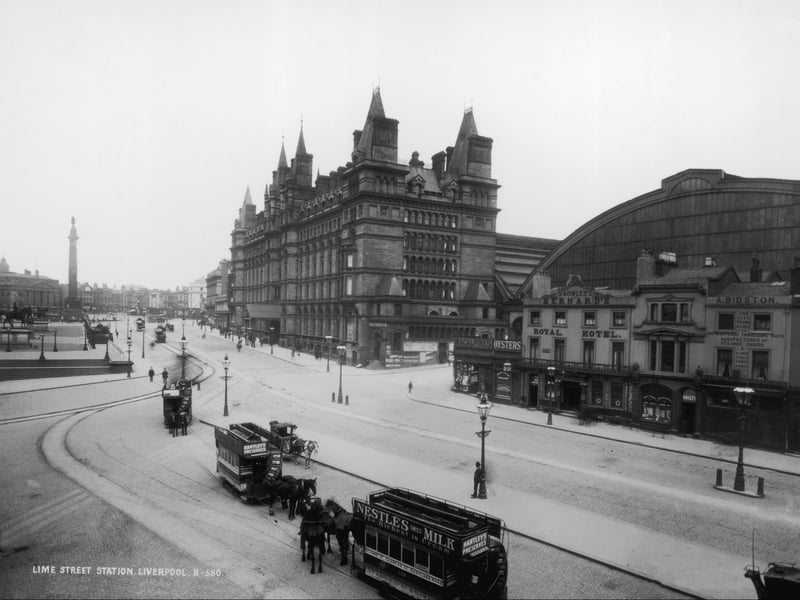
7. Lime Street - 1890
Horse drawn trams line up outside Liverpool Lime Street station in 1890. | Getty Images Photo: London Stereoscopic Company/Hulton Archive/Getty Images
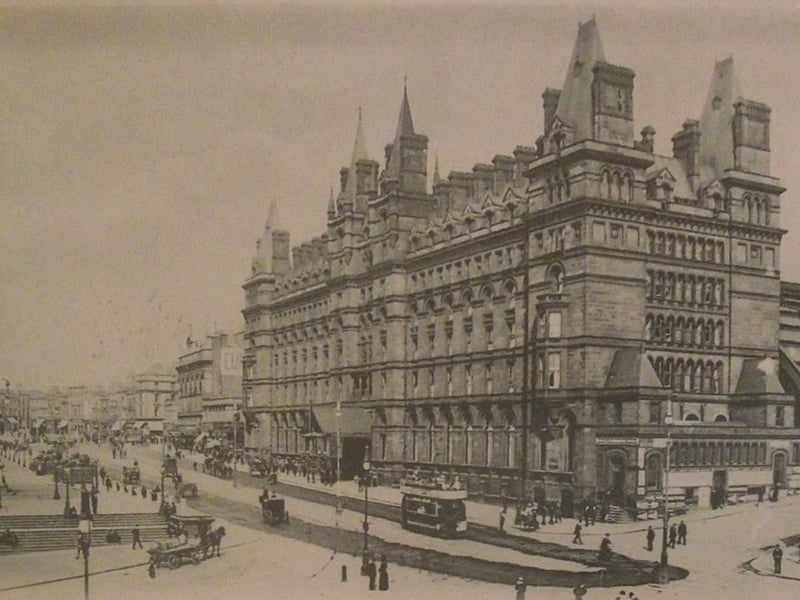
8. Lime Street - 1902
Many of the horse and carts had been replaced by trams by 1902. The tram network ran into the city centre and along Lord Street and Church Street. | Wikimedia Photo: Wikimedia