


Lord Street has remained one of Liverpool’s main shopping districts for over two centuries but the curious history of one of the city’s most famous roads stretches much further back than that.
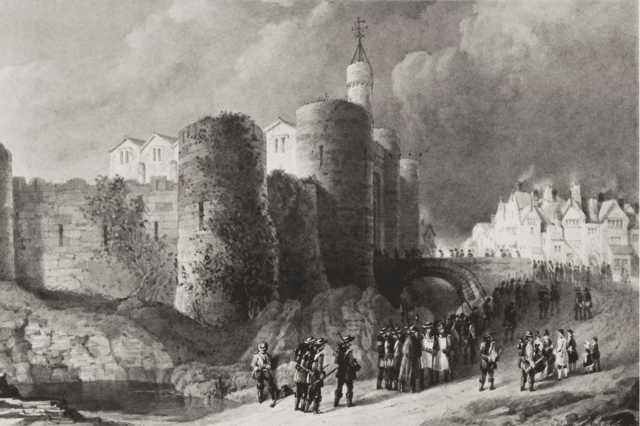
Its past doesn’t quite match the original seven streets of Liverpool set out in the charter of King John in 1207, but its roots do stem from the castle that was constructed to fortify the fledgling medieval settlement.
Liverpool Castle stood roughly where Derby Square and the Queen Elizabeth II Law Courts are now. In 1668, a proposal was put forward by Lord Molyneux, the Lord of Liverpool, to cut a road through the castle’s orchard to a nearby heath and stream.
Despite some opposition from the local burgesses, an agreement was eventually reached and in 1671 Lord Molyneux Street was constructed, with a bridge over the stream and pool that ran through where Whitechapel is today.
The important thoroughfare was later renamed Molyneux's Lane and was described as being ‘ill-built and very narrow’ around 1775, by historian Richard Brooke, with ‘several good houses, inhabited by respectable families, some tolerably good shops, and several taverns’.
By the late 1700s, residents and shopkeepers paved the road and paths and it became known as Lord Street. The area continued to evolve with the construction of what are now Grade II listed buildings.
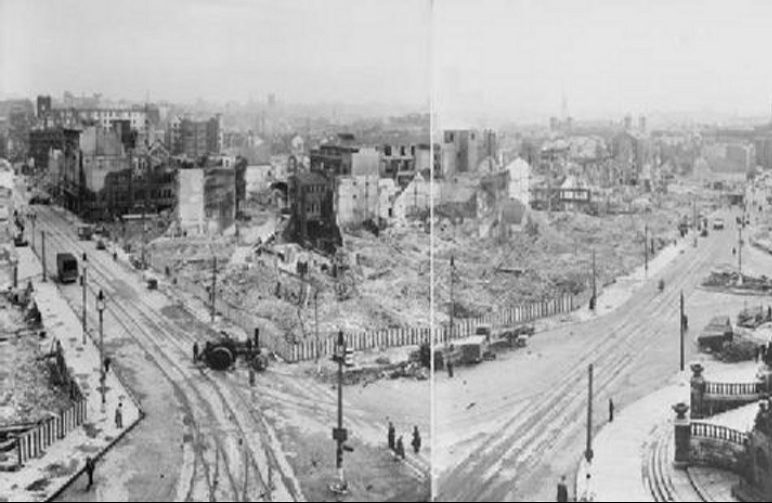
Lord Street was bombed by the German Luftwaffe during the Blitz in World War II and had to be largely rebuilt in the 1950s but it is still thriving and oozing with history.
Here is a collection of photographs, showing how Lord Street has evolved over the last 350 years and more information on its past.
9. The history of Lord Street
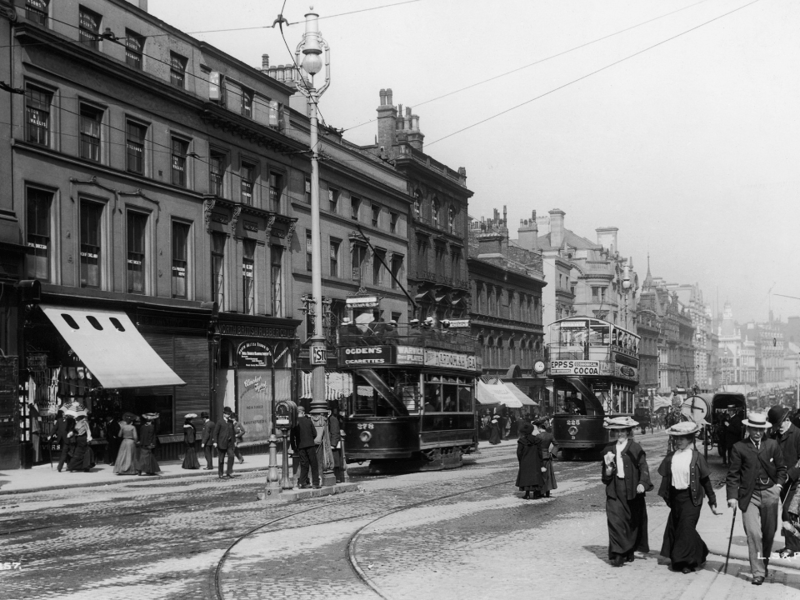
Dapper gentlemen and elegant ladies walk down Lord Street in 1903. | Stereoscopic Company/Hulton Archive/Getty Images
10. The history of Lord Street
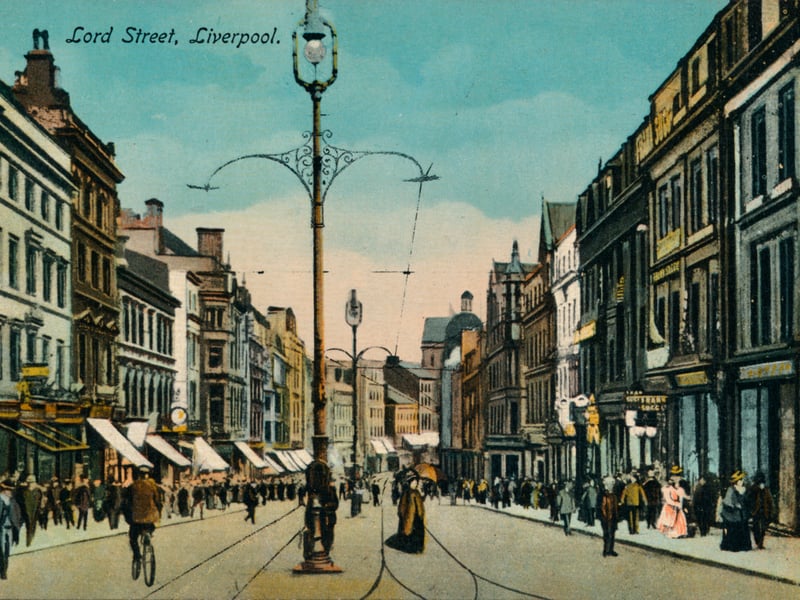
By 1910, Lord Street is lined with shops and businesses and is a major destination for Liverpudlians and visitors to the thriving city. | The Print Collector/Getty Images
11. The history of Lord Street
In 1941, Lord Street, Church Street and the surrounding area was decimated by the Blitz in World War II. Much of Lord Street was rebuilt in the 1950s and a piece of the original bridge built by Lord Molyneux in the 1600s was found under where McDonald's now stand. | Imperial War Museums/Wikimedia
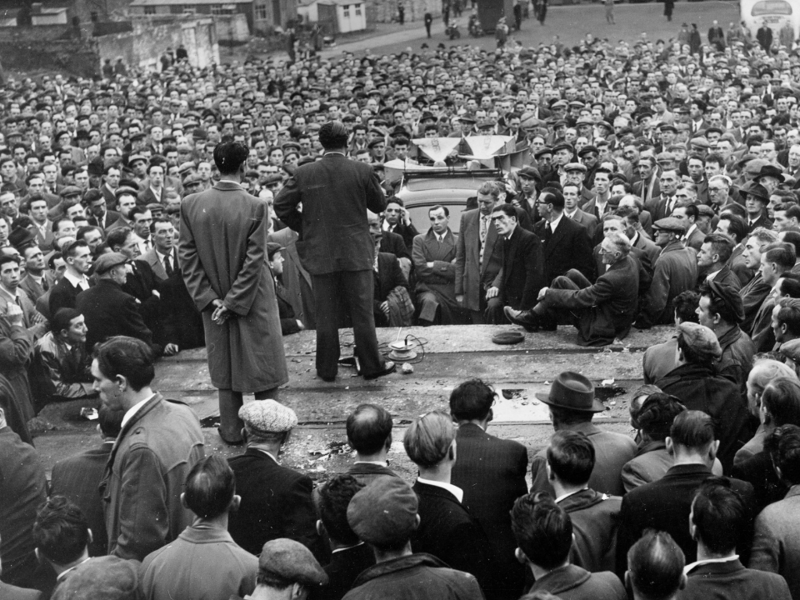
12. The history of Lord Street
In 1954, Liverpool's dockers gathered on Lord Street for a rally as they decided to strike in support of the London dockers. | Keystone/Getty Images