
It’s strange to think that if a mum in Spain didn’t make one decision I wouldn’t have a future

Lyra Cassell shares her incredible journey of overcoming an aggressive form of blood cancer through a unique transplant.
A Liverpool teenager with a rare cancer had her life saved by blood taken from the umbilical cord of a baby born in Spain 12 years earlier.
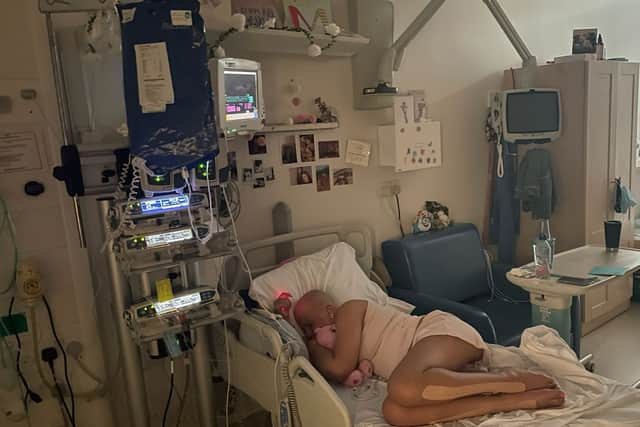

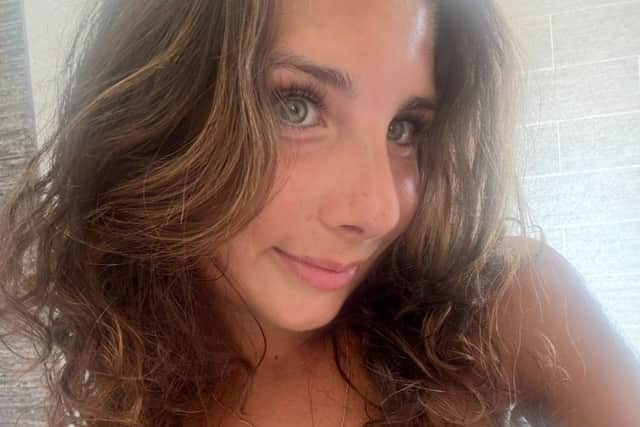
Lyra Cassell, 20, underwent the unique transplant at age 16, following her diagnosis of precursor T-cell lymphoblastic leukaemia cancer.
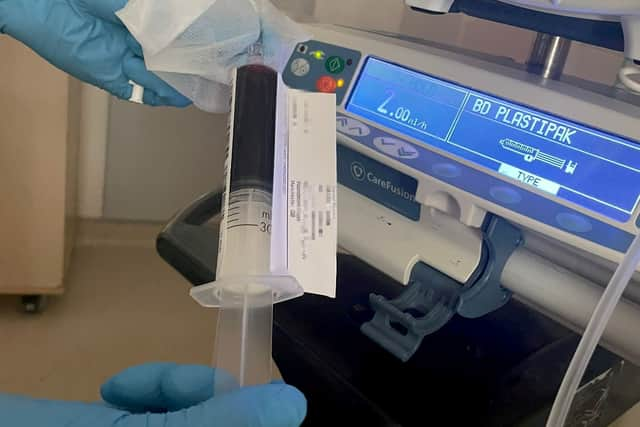
Following rounds of chemotherapy doctors, injected around a 20ml vial of blood taken from the placenta and umbilical cord of the a baby - which has since cured her.
A cord blood is the blood that remains in the placenta and umbilical cord after the birth of your baby, according to the NHS. It is said to be rich in stem cells, which can be used to treat many different cancers, immune deficiencies and genetic disorders.
Lrya, from Allerton, said: "The transplant itself was a tiny vial of blood, that was it. I still find it crazy how that small vial saved my life.
"It’s strange to think that if a mother in a Spanish hospital didn’t decide to donate that blood in 2010, I wouldn’t have had a future."
Lrya was just 16 when she spotted a lump around the groin area of her body in August 2021. Following the discovery, she visited the GP with her mum, Hayley, who told her it was a suspected hernia.
Just days later she found another lump, this time on her neck, and after visiting the GP again she was told that she was eating too much sugar and was close to being diabetic which may be the cause.
Lyra has said it was only when she had her appointment at Liverpool Royal Hospital two weeks later where she underwent a biopsy, that she was given the tragic news. She was diagnosed with an aggressive and extremely rare form of blood cancer on September 29, 2021.
At the time of the diagnosis, she was super fit running five times a week for the Liverpool Harriers and Athletic Club and had just completed her GCSEs. She started treatment at Alder Hey Children’s Hospital the next day, five days a week for six weeks.
Lrya said: “After my chemo, I got my Measurable Residual Disease (MRD) results which showed that the chemo hadn’t killed any of the cancer.
"It had just stopped it from progressing and I was told we’d need to start looking at a transplant.”
For a transplant to happen another round of chemotherapy was needed to lower the cancer levels in her body. A couple of months later, her MRD levels had come down so much that a stem transplant was deemed possible.
Lyra was then transferred to the Royal Manchester Children’s Hospital, one of the limited number of hospitals that could carry out the procedure. It was recommended that a cord blood transplant would be best.
The blood Lyra used was taken from a placenta and umbilical cord from a baby in Spain 12 years ago which was frozen.
Lyra had total body irradiation, a form a radiotherapy, twice a day for three days, which she described as ‘intense’ which prepared her body for the transplant on April 7, 2022.
Lyra said the first few weeks following the transplant were "tough".
“The first four weeks following my transplant were tough, I was on a lot of heavy medicine and felt out of it. I couldn’t stomach food so I had a feeding tube,” she said.
"The chemo and irradiation had damaged my nerves which combined with being sedentary for so long meant I could barely walk."
Lyra rang the all-clear bell on May 25, 2022 but said recovery was “a lonely place”.
The keen runner said: “It felt like everybody was getting on and I was staying still.
"Even when I was discharged I had to semi-isolate for six months, I saw some friends now and again but couldn’t risk any more than that due to the chances of infection.
"Recovery was a lonely place. I did manage to go back to school for year 13, but it was a struggle and I didn’t realise how tired and chronically fatigued I would be. But my friends were great, especially my best friend, Liv.
“It was weird seeing everyone again and so much had changed but everyone was so lovely and supportive of me coming back.
“Although so much had happened to me, nothing ‘teen interesting’ had and I didn’t want cancer to be the constant topic of conversation.
"I found that my friends didn’t want to ask too much either which was a really nice change to be seen and talked to as me again and not as a cancer patient.
“I found it hard sometimes to listen to what everyone had been up to and experiencing while I had been fighting for my life.
"I wouldn’t call it jealousy, but I did envy that sense of normality everyone else had that I never got to experience.
“I also really didn’t want to be labelled as the ‘cancer kid’ but it was hard not to be that when I looked so thin, my walking was visibly ‘not normal’ due to chemo causing nerve damage, wearing a wig and I often left school early due to fatigue.
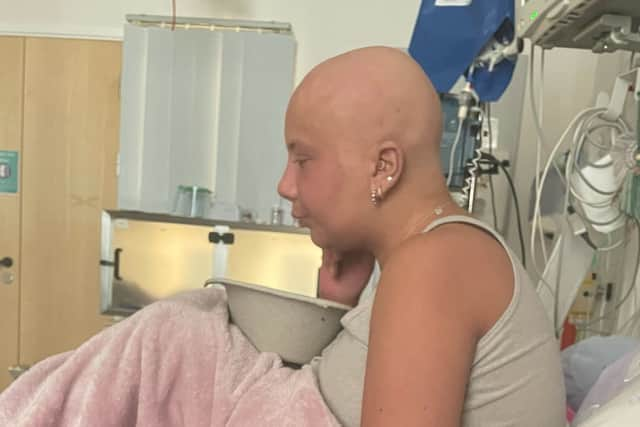
“My mum says she is very proud of how I powered through school and A-levels, I can look back now and feel proud of it.
Lyra has said that following her positive experience with the physio and occupational therapy at Royal Manchester Children’s Hospital she has decided to pursue it as a career.
She said: “I liked that occupational therapists are the next step to home, the patients are on the path to recovery and the therapist is the one to help them cross the finish line to some sort of normality.
“I think from my experience of being labelled as a cancer patient, I liked the idea of giving someone their identity back even if it was only a small part of getting them back to something that made them, them.
- Get the biggest stories from Merseyside in your inbox with Liverpool World’s free newsletter emails.
“I’m also keen to continue to raise awareness of organ, blood and stem cell donation.
"My diagnosis sparked many friends and family to sign up and donate, one of my best friends’ uncles added himself to the donation list and within months was called up to donate his stem cells.
“It gives me peace of mind to know that my diagnosis has also helped other people.”
Cord blood can be donated to the UK’s public cord bank at several maternity units in England. For more information on how to donate, visit www.nhsbt.nhs.uk. To register as a blood donor, visit: www.blood.co.uk.