
Prestigious award celebrates 'pioneering' St Helens women who played on during 1921 FA ban

In 1921, the Football Association (FA) banned women from playing football, claiming it was ‘quite unsuitable for females and ought not be encouraged’.
A Merseyside park where the first women's football stars played a century ago has been honoured with a prestigious blue plaque.
During WWI, women's football was gaining popularity, with St Helens Ladies growing from local munitions and glass worker teams such as Sutton Bond and Rainhill Munitions, to become a formidable force in the ‘first golden era’ of women's football.
However, in December 1921, the Football Association (FA) banned women from playing, claiming ‘football is quite unsuitable for females and ought not be encouraged’. Despite the ban, teams continued to play on local parks and open ground, with St Helens Ladies playing their home games on pitches such as Queens Park, where teams like Bold Rangers Juniors Diamonds girls team train and play matches to this day.
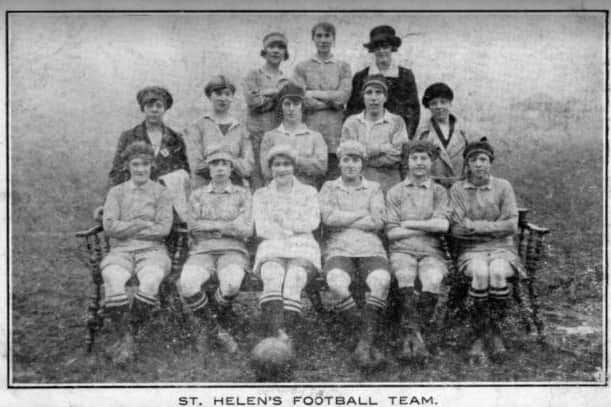

At the time, St Helens Ladies were captained by inspirational goalkeeper, Edith Waine, and contained some remarkable players such as Lydia Ackers, Susie Chorley, Lizzy Ashcroft, and Alice Woods. Footballing trailblazer Lily Parr played just one game for her hometown team before signing to Dick Kerr Ladies in 1920, becoming the first woman inducted into the English Football Hall of Fame, with statue situated at The National Football Museum in Manchester in her honour.
In their last ever match on Saturday 31 March 1923, St Helens Ladies Amateur Football Club bowed out in style by thrashing the world's greatest women's football team, the Dick Kerr Ladies 5-1, on Queens Park. Just ten days later, Lizzy Ashcroft, who grew up in St Helens, joined the Dick, Kerr Ladies before becoming vice captain and then captain. Through their matches, St Helens Ladies raised thousands for local and charitable causes, and this week (August 27), a blue plaque was unveiled outside Queens Park Leisure Centre to commemorate the squad and celebrate their determination. The inscription reads: “The women of this pioneering football team played on during the Football Association's 1921 ban.”
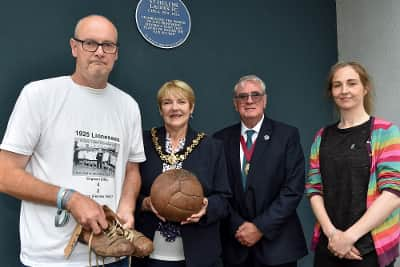
Among the special guests at the unveiling ceremony was Stephen Bolton - grandson of former player, Lizzy Ashcroft. Commenting on the celebration of his grandmother’s legacy, Mr Bolton said: “I can't begin to tell you how honoured I am - it's very emotional for me. I grew up as a Preston lad and I knew my granny played football but very little else. Eventually, I found out that she had this amazing career, taking over the captaincy from Lily Parr in the Dick Kerr Ladies team in 1935.
"The history of women's football is often framed around the famous Dick Kerr Ladies but in the golden era of WW1 and post World War, leading up to the 1921 ban, the second greatest team was St Helens Ladies and they barely get a mention but I think they has have an equal right to call themselves the home of women's football, alongside Preston."
St Helens Ladies FC become the second recipient of the council's blue plaque scheme, following heroine assistant school mistress, Hannah Rosbotham who was recognised in July at Sutton Family Hub, with future plaques open to public nominations.