
The hardest thing was writing a letter to my family and praying they’d never read it
The airfield is silent as a British military plane sits on the tarmac beneath a blazing Afghan sun, its engines idling, the heat shimmering around it. Coffins draped in the Union flag are carried slowly, deliberately, towards the waiting transit.
Watching close by are more than 1,000 troops standing 10 ranks deep, not a word exchanged, accompanied by the mournful notes of Bagpipes rising into the desert air. When the aircraft finally takes off, climbing into the pale horizon, no one moves until it disappears from sight.
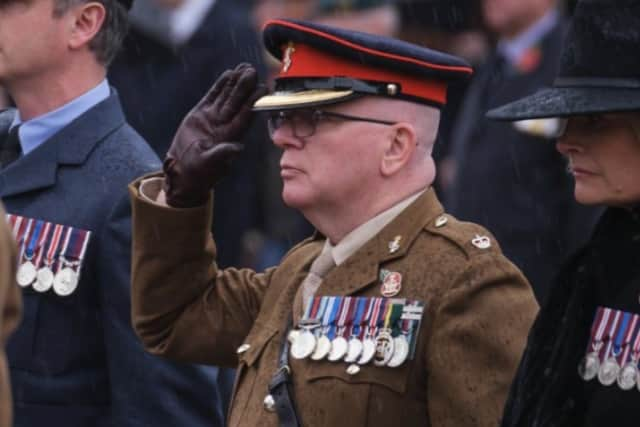

“They were known as ‘Angel flights’,” says Major Nick McEntee as he recalls some of the more sombre moments of his 45-year military career, “It still leaves a huge lump in my throat. It was incredibly poignant, especially knowing I was replacing a Major who had been killed.
“Afterwards, we would walk away with a great deal of emotion, but knowing we’d paid the respect due to our fallen comrades.”
For Maj. McEntee, that scene is etched deep into the memory of countless British soldiers, capturing the essence of service and sacrifice, all core concepts at the heart of Remembrance Day and values which will be honoured at countless services today.
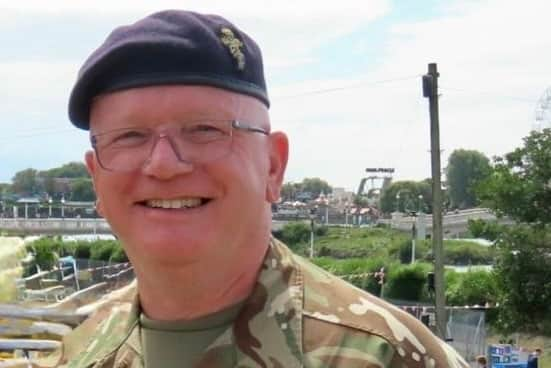
Maj. McEntee, 61, was born and raised in Bootle and describes his family as staunchly working class with a storied history of military service. Both of his brothers served, while his father, grandfather and other relatives were also military, mostly serving with the Kings Regiment.
Like many other people across the country today, Maj. McEntee will make time to remember the sacrifice of all those who have served and died in wars around the world. Remembrance Day services take place at 11am every November 11, the time and date when The Armistice was agreed between The Allies and Germany in 1918, ending a four-year-long war which claimed the lives of approximately 8.5m soldiers.
“We sign on that dotted line,” Maj. McEntee says, “and that dotted line is basically writing a blank check, knowing that we may never come back.”
For those who serve, that truth is not abstract, it’s a lived reality, felt in the ritual of repatriations and in the quiet moments when they sit down to say goodbye to loved ones. “The final letter home,” Maj. McEntee, “is a letter which you write and you seal it and hand into your admin office. It’s kept safe, but if you happen to lose your life, that letter would be sent back home and handed to your next of kin.”
He pauses before adding quietly: “The hardest thing I’ve ever had to do was writing a letter to my family and praying they’d never read it. ”
For Maj. McEntee, Remembrance Day is not just about the past, it is about continuity of service, duty, and the quiet dignity of those who still shoulder the risks of war.
He added: “We mustn’t forget what happened in the Great War and we mustn’t forget what happened in the Second World War, but I think we need to expand the focus as a nation and also reflect on more modern day conflicts, because wars are not going to go away.”
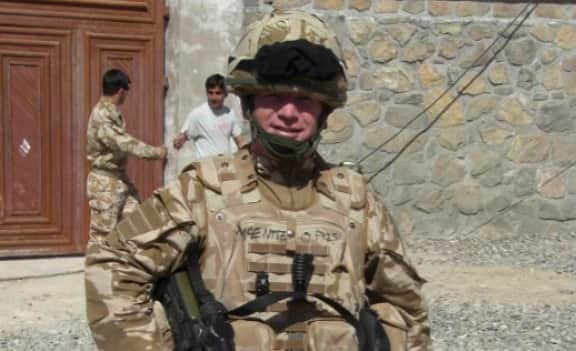
That call for a broader remembrance reflects a changing military landscape. In 2025, Britain’s armed forces are smaller but more globally engaged, and many soldiers have served on multiple operations, often in complex and controversial conflicts.
Yet, as Maj. McEntee insists, politics does not define their service: “You’ll find most serving military are very apolitical when it comes to our job.
“Yes, we all have our own political views, but if you ask anybody who they serve, they’ll tell you quite simply that they serve the monarch.”
Maj. McEntee believes service is not just about fighting wars, it’s about living with their consequences, both visible and invisible: “We look out for each other.”
Maj. McEntee now works at UK Resilience and is the deputy chair for The Royal British Legion in Southport, spending his time advocating for the support needs of armed forces personnel. He added: “I never question anyone about their service. As far as I’m concerned, they served, and we’re there for them.”
That comradeship is what binds the military community long after the uniform is hung up, and will be on full display at Remembrance Services this morning. Today offers a moment to honour not just the dead, but also the living and to remember those still carrying the weight of war in their minds and memories.
Maj. McEntee believes there’s now a broader understanding that remembrance is not frozen in time: “It’s also for people now who had sons, daughters, husbands, wives, parents, who fought in more modern conflicts.”
As Britain marks Remembrance Day 2025, the red poppy still blooms on lapels, the Last Post still echoes across memorials, and the two minute silence still falls, yet the stories being remembered are changing. They now include the soldiers who patrolled Helmand, those who cleared IEDs in Iraq, and the peacekeepers deployed to fragile corners of the world.
Maj. McEntee said on Sunday: “Today is about empathy and compassion and taking pause to reflect on what service means and to honour all who serve, in every generation.”