
Wrongfully-convicted Peter Sullivan 'bullied' into false murder confession

Peter Sullivan has said he cannot forgive the people responsible for him spending 38 years in prison for a murder he did not commit.
The now-68-year-old was given a life sentence in 1987 for the murder of 21-year-old Diane Sindall who was found dead on August 2, 1986. Ms Sindall was found in an alleyway in Birkenhead after leaving her place of work in Bebington.
Peter Sullivan is believed to be the UK’s longest-serving victim of a miscarriage of justice, after his conviction was overturned and he was released in May of this year - 17 years after his first appeal bid.
In June 2023 Merseyside Police reopened the investigation into the murder of the 21-year-old Wirral florist, following notification from the Criminal Cases Review Commission (CCRC), who were in the process of carrying out a review which identified that DNA recovered at the scene was not a match for Peter Sullivan.
Once the CCRC completed their review they referred the matter to the Court of Appeal in October 2024.
Mr Sullivan’s case appeared before the Court of Appeal on May 13, 2025, on the basis of new DNA findings relating to semen found on Ms Sindall’s body. Lord Justice Holroyde ruled that, at the time of his conviction, “the evidence as a whole would have been considered as insufficient to charge” had the new evidence been available.
During the hearing, Lord Justice Holroyde, sitting with Mr Justice Goss and Mr Justice Bryan, stated they had “no doubt that it is both necessary and expedient in the interests of justice” to accept the new DNA evidence.


Mr Sullivan attended the hearing via video link from HMP Wakefield and appeared to weep as his conviction was quashed. He had tried twice before to get the conviction overturned.
In the first interview since his release, Mr Sullivan said he cannot forgive those responsible for him spending 38 years in prison for a murder he did not commit.
In the exclusive interview with BBC North West, aired on the Today programme today (November 19), he said: “I can’t forgive them for what they’ve done to me because it’s going to be there with me for the rest of my life – I’ve got to carry that burden until I can get an apology on what happened from everyone else who’s been involved with the case.
“That’s all I want is an apology with the reason why they done this to me… from Merseyside Police and everyone else – I lost all my freedom, I lost my mother, since I was put in prison, I’ve lost my father, and it hurts because I wasn’t there for them.
“I have never been able to set myself to go and see my mum’s grave, and I can’t … carry on with my life if I can’t get an answer out of them, that is what I need the most is an answer from them, and that’s all I care about, that answer – why they done it to me?”
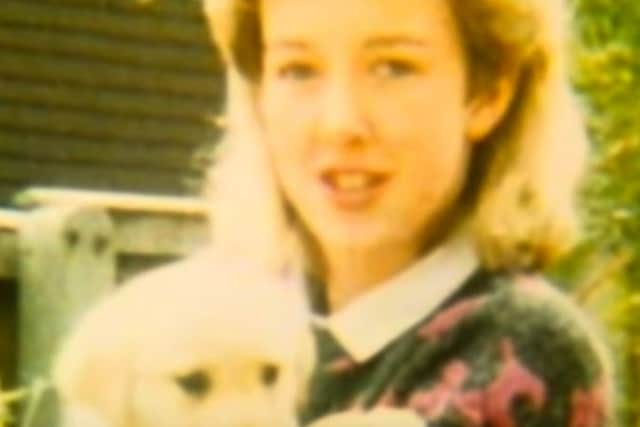
The person responsible for Diane Sindall’s remains unknown, with Mr Sullivan stating he feels sorry for her family. He said: “I really do feel sorry for them and what they’re going through at the moment, where they’re back at square one and not knowing who the person is that killed their daughter.
“I don’t know what to say to them, I am really sorry for what’s happened to their daughter, and if they need – if they want – my support when they go to court with the guy, when they find him, I will go to court with them, I will be there by their side 100%, because I will be there for them.”
During the Court of Appeal hearing in May, Jason Pitter KC, for Mr Sullivan, told the court that semen had been left on Ms Sindall’s body in what was “a grotesque offence”. At the time of the murder, and in the years since, there was not the scientific capability to properly analyse the sample and get a DNA profile.
Mr Pitter said had the analysis been carried out earlier than last year, there was a risk that the sample itself could have been destroyed completely. After the sample was analysed in 2024, it was found that the DNA profile was not Mr Sullivan’s.
He said: “The prosecution case is that it was one person. It was one person who carried out a sexual assault on the victim. The evidence here is now that one person was not the defendant.”

Mr Pitter argued that the evidence could not now pass “the threshold with which a prosecution could take place”, adding that bite mark evidence used in the original trial, which the prosecution claimed at the time matched Sullivan and were found on Ms Sindall’s body, were no longer viewed as reliable evidence of identification in criminal cases.
The Criminal Cases Review Commission had previously stated that “there was also evidence to suggest there were possible breaches of the Police and Criminal Evidence Act 1984 (PACE), which regulates police activities, in relation to the interviews, as Mr Sullivan was not provided with an appropriate adult and was denied initial legal representation”.
Mr Sullivan had been denied access to legal advice in the first seven interviews despite requesting it, but later “confessed to the murder” in an unrecorded interview a day after his arrest.
He later repeated the confession in a recorded interview, but Duncan Atkinson KC, for the CPS, told the court this “was inconsistent with the facts established by the investigation” and inconsistent with Sullivan’s earlier interviews. Sullivan then retracted his confession later that day.
- Get the biggest stories from Merseyside in your inbox with Liverpool World’s free newsletter emails.
Mr Pitter stated that these “significant admissions” and “incriminating statements” made by Sullivan at the time of the killing were “inherently unreliable” due to his “vulnerability”.
Speaking with BBC North West, Mr Sullivan claimed he was beaten, denied food and bullied into a false confession. He said: “All I can say, it was the bullying that forced me to throw my hands in, because I couldn't take it anymore."
Reacting to the new BBC North West interview, Chief Constable of Merseyside Police Rob Carden said: “It was a grave miscarriage of justice and obviously as chief constable of Merseyside it doesn’t matter how long I’ve been there, I deeply regret the detrimental impact on Mr Sullivan’s life.”
Chief Constable Carden - who took up the job earlier this year - said he will refer the original investigation into Diane Sindall’s murder to watchdog the Independent Office for Police Conduct. The investigation into her murder continues, supported by the National Crime Agency.