
My cancer diagnosis gave me the health kick I needed
Before retirement, Frank’s working life left little room for looking after himself.
“When I was working I was too tired and stressed to exercise,” says Frank. “Some days I was sitting at a desk for 11 hours without proper breaks, and driving too and from work settings or meetings could be two hours each way. Lockdown also had a significant impact on my health. My exercise habits were lost and not regained.”
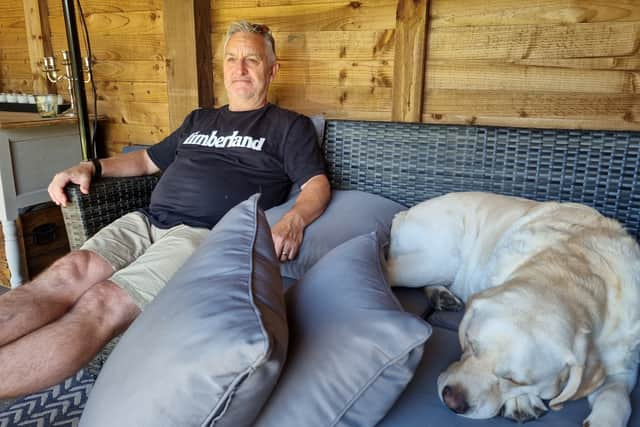

He was aware of a family history of cancer. His maternal grandfather died of prostate cancer in 1975 and his father died of bowel cancer at 54. Because of his ulcerative proctitis, diagnosed in 2001, Frank had previously had a digital examination for prostate cancer and has regular colonoscopies.
“Because of this I assumed that my prostate was also being monitored. Obviously it wasn’t.”
Looking back, there were signs he didn’t recognise.
“I had pains in my groin and leg area, low libido and feelings of fatigue, all of which I put down to age and my job.”
In 2020, Frank contacted his GP because he had gained weight and was feeling tired, and he was worried he might be developing diabetes. Because of Covid, the appointment took place over the phone.
“During the conversation about fatigue I made a flippant comment about getting up to go to the bathroom in the middle of the night, and that it wasn’t helping my sleep. The GP called me back about an hour later to request a PSA test as a belt and braces approach.”
In October 2020, his PSA came back at 4.8. His GP referred him to a consultant at his local hospital trust, and a repeat test four weeks later came back at 4.6. A scan in November identified shadows on his prostate, and after a biopsy in December, cancer was confirmed in January 2021 in 12 parts of his prostate.
Because of his ulcerative proctitis, Frank was advised that surgery was the only option available to him. Covid restrictions meant a date couldn’t be confirmed, but he had surgery in April 2021. By July his PSA was negative. His testing moved from every six months to annually in April 2026.
Keeping it to himself
Frank’s first reaction to the diagnosis was acceptance.
“I just accepted it. As it was deemed early stages, I assumed recovery would be complete and therefore I wasn’t worried,” Frank reflects. “I was given large amounts of literature to read which, while informative, was hard to relate to my circumstances.”
He told his immediate family after a couple of days, but presented it as all positive and nothing to worry about.
“There’s been a lot of cancer in the family. I didn’t want my partner to worry, and I didn’t want to add to the worries of other family members who had lost their partners to cancer.
“I didn’t feel I could open up in case it became emotional and caused worry for the others. It was just easier to make out that the prognosis was positive and I wasn’t concerned. I think it’s a personal coping mechanism.”
Frank took a month off work, before returning so he could focus on other things, but as his surgery date approached, it became harder to concentrate.
“If I’m honest, I think I just blocked it and resigned myself to having cancer. I had no real concept of what was ahead.”
Finding his strength again
The impact of surgery on Frank’s urinary and penile function was significant and distressing, and he felt there was little support around rebuilding his strength and confidence.
“Following surgery I was unsure what I could do,” he explains. “Luckily, 10 months after surgery I took part in the Battle Cancer Programme, and it changed my life. I discovered a love of lifting weights and other functional fitness movements.”
Since March 2022, Frank has continued to exercise in a variety of ways. He has returned to horse riding and, with support from a Battle Cancer coach, continues to take part in Battle Cancer fundraising events built around exercise challenges.
“I am far more active since treatment.”
The experience has also changed the way he approaches his health more broadly.
“Since surgery I have read more and adopted lifestyle changes such as regular exercise, and I seek GP advice should I have changes to my health.”
Taking the first step
Frank believes there is still a lack of awareness about prostate cancer among men, and that many don’t recognise the signs or feel able to raise them.
“I didn’t think I needed it. I was unaware of the signs and indicators and the importance of getting them checked,” he says. “I felt, how was I going to go to the GP with strange aches and a vague way to describe them? Especially as getting appointments with health services was difficult.
“I think there is a lack of awareness in the general male population, especially as it’s still seen as an old man’s condition. The recent disclosures by high-profile athletes such as Chris Hoy may have raised awareness for some men.”
Frank’s experience helped inspire his nephew Tom to create Heracles, a new UK men’s healthcare provider focused on making it easier for men to take control of their health.
Frank believes making the process easier and more convenient could encourage men who might otherwise put it off.
“It removes the fear of conflict if the GP does not agree to test. It allows a system to have it checked every 12 months without the need for a visit to the GP for a referral and then arranging a blood test. If it wasn’t offered to me as part of monitoring, I would use it for peace of mind.”
His message to other men in their 50s and 60s who think they don’t need to worry is simple.
“A simple blood test allows early identification, and surgery is not the only option,” says Frank. “Don’t be afraid to seek help with exercise. Organisations such as Battle Cancer can offer practical support to help build physical strength and confidence.
“And don’t be afraid to ask questions about your health. It’s your body, you know it better than others. If you buy a car, you have it checked regularly and maintain it to keep it performing well. You only get one life. Look after your body like you would your car.”