
We need to look to Sheffield, Bristol and Manchester - Wirral feels 30 years behind

A Merseyside area feels like it’s 30 years behind Greater Manchester, a local authority has been told following a critical review of major schemes to revive parts of it.
Wirral Council has been told to look to Sheffield, Bristol, and Salford in Greater Manchester in an attempt to move its plans forward.
Last week, a Wirral Council-commissioned review into what went wrong at the local authority’s regeneration department was published. The findings raises serious questions about problems within the council while also offering a way forward.
The review makes a number of key recommendations. These include looking at places where regeneration has been done well and copying them, coming up with a recovery plan for Birkenhead town centre in the next three months, as well as establishing a partnership with the Liverpool City Region Combined Authority and a model to deliver regeneration.


At a policy and resources committee, councillors unanimously accepted the findings of the review and heard from Aughton Lane director Michael Palin, the regeneration consultant brought in to carry out the inquiry.
Mr Palin told the local authority he felt they were already taking steps to address issues highlighted in his review arguing it was important for elected members to recognise how problems the council faced, adding: “It is therefore not a surprise that you do face challenges in terms of delivery.”
He added while many areas might face a number of issues, Wirral had all of them and Birkenhead with its underground train lines, heritage buildings, and Victorian docklands was particularly difficult.
Mr Palin said the council had a vision and a lot of ambition but that needed to have been balanced with the reality the council did not have a way to deliver that at this point in time, telling councillors: “I do think the [past] senior management and the leadership of the council should have spotted the problem earlier and should have been more transparent.”
Despite being “hard hitting” about those problems, he said the council needed to avoid a downward spiral and needs “to move on from the negativity and reset going forward.” This included accepting there may be trade offs in order to deliver certain projects and planning out a long strategy to deliver.
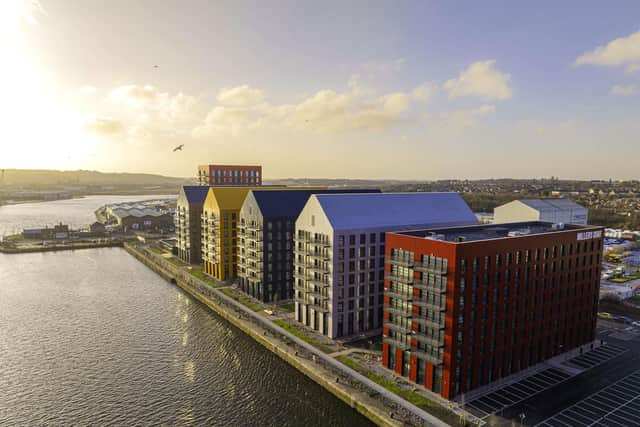
Mr Palin said he visited Salford Quays with Wirral Council leader Cllr Paula Basnett, who called for the review. This was an area he felt was similar to the plans put forward at Wirral Waters and east Wirral.
Pointing to 500 apartments at Miller’s Quay, he said this reminded him of the first homes built in Salford in the 1980s, adding: “It feels like you are 30 years behind. What that reinforces is the partnership between the council and the private sector.”
Responding to the review, Labour regeneration chair Cllr Mark Skillicorn said he was glad the council had investigated the issues as councillors were now unified with a good relationship with officers, adding: “It would just be bad news after bad news, it’s great everything is out in the open.”
Green Cllr Ed Lamb said it was “a blow and I think we needed it” but felt more positive going forward. Conservative Cllr Jeff Green questioned whether the council “had bitten off more than we can chew” and things had been redevelopment rather than regeneration.
Councillors also received updates on the budget for the current financial year which runs until March 2026 as well as the financial year after that. A report suggests the council could face a £10.5m gap in its budget this year and a gap of more than £20m next year, possibly nearly £50m in a worst case scenario.
Responding to questions, officers suggested options on the table could include outsourcing some leisure services, job losses, and reviewing staff terms and conditions among the difficult decisions that may need to be made. However leading councillors said they would take steps to protect those most vulnerable.
One of the biggest issues facing the council is a major overspend in adult social care and public health services, similar to many councils across the country. Interim Chief Executive Matthew Bennett said one challenge the council had was trying to balance its own books while the NHS board for Cheshire and Merseyside prepare to make some of the biggest cuts in the country.