
Row breaks out over disappearance of Merseyside beach and lifeboat crews are really worried
Lifeboat crews are worried about access to the sea in one part of Merseyside and said the problem is getting worse, according to one local councillor.
Those concerns relate to the increasing amounts of mud on Southport beach which is eroding the route lifeboats would use when attending an emergency.
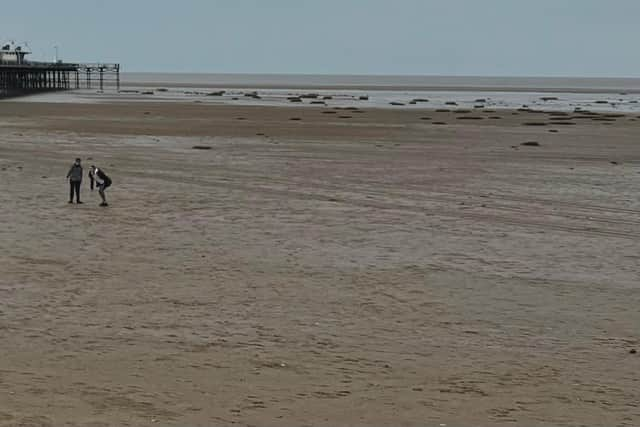

The issue was raised by Cllr John Pugh at a council meeting last week (November 12), presenting a motion about access to Southport beach. Cllr Pugh described a visit to the Lifeboat station, where he was told the route to the sea had become increasingly difficult.
He said: “There’s a massive amount of mud and it’s very difficult to even get the sort of vehicles they’ve got, out quickly enough in the case of an emergency.”
Cllr Pugh believes there are available solutions and referenced the possible use of wood or stone to construct a passageway to sea, adding in a follow up statement: “Even a few seconds delay in an emergency can be crucial when lives are at risk.”
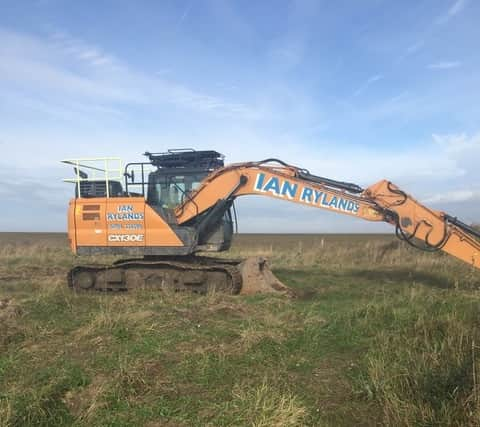
Since the council meeting, the row over Southport beach has rumbled on into this week. Earlier today, Cllr Pugh published photographs appearing to show the Royal Society for Protecting Birds (RSPB) working to modify parts of the beach in the north of Southport.
Cllr Pugh said: “Sefton’s excuses for inaction with respect to the leisure beach and lifeboat access are looking very thin in comparison.”
Sefton Council say the disappearance of sand on Southport beach – and the emergence of salt marsh – is part of gradual accretion, a spokesperson told the LDRS: “The development of salt marsh in Southport is a continuous process that has been ongoing for thousands of years.
“This, coupled with natural accretion, where a beach grows due to accumulated sand and the coast moves seaward, means that the sandy beach is now further out to sea than it was a few decades ago.
“Salt marshes are a rare and valuable part of the natural habitats on the Sefton coast. As well as being many times more efficient at capturing carbon than woodland, they provide a natural sea defence.
“Since 1860, England has lost 85% of its salt marshes. Their removal is generally opposed due to salt marsh being a very important coastal habitat within a site of special scientific interest (SSSI) with Ramsar status, plus the fact that it would have to be repaired if intentional damage was caused to it.
“Past attempts to remove salt marsh vegetation, using various methods, have proved ineffective. Efforts to entirely remove the marsh land would not only come at a massive financial and ecological cost but would likely only be a short-term solution.”
In reference to the accessibility issue, the council said there are currently no plans to establish or provide any formal or informal vehicular access onto the foreshore, across the developing salt marsh at Southport.
The spokesperson added: “Sefton Council is in regular dialogue with partner agencies working on the coastline, including Natural England, the RNLI, the Coastguard and others. We work alongside these agencies to collectively protect and preserve the natural environment within a legislative framework, while ensuring that emergency services can operate safely.
“We understand the concerns of lifeboat operators and will continue to work alongside them to make sure they are able to continue their vital duties.”